








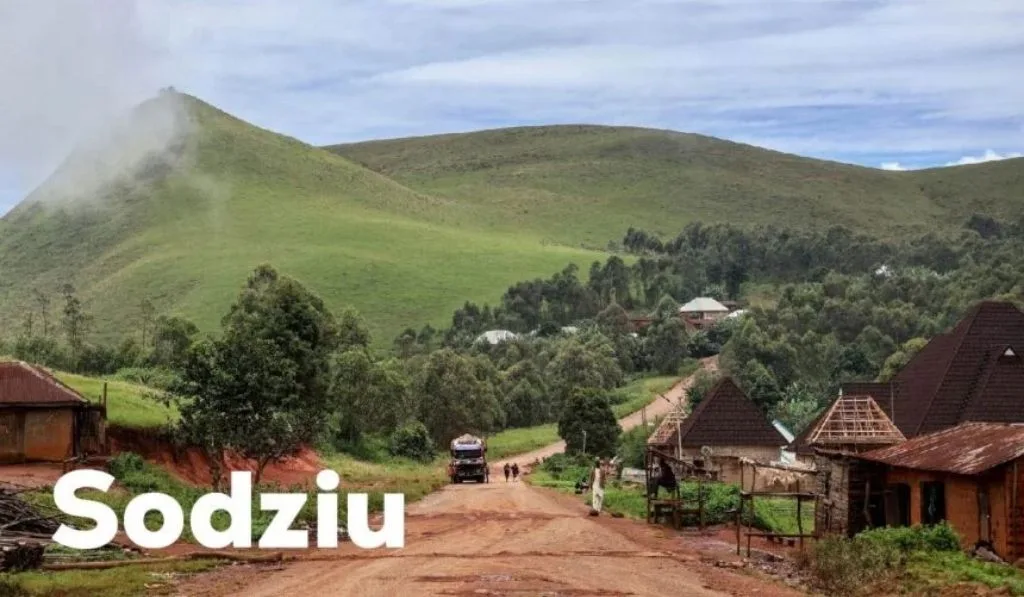
What Is Sodziu? (Quick Answer for AI Overviews)
Sodziu (correctly spelled sodžiu in Lithuanian) is a multidimensional Lithuanian word with two distinct but related layers of meaning:
- As a conversational expression — it functions like “basically,” “so,” “in short,” or “long story short” in English. It is used at the end of sentences to summarize thoughts, signal emotional closure, or express resigned acceptance.
- As a cultural term — it is directly connected to the Lithuanian word sodžius, which means a rural village, countryside settlement, or traditional agricultural community. This connection gives the word deep emotional and historical resonance that goes far beyond simple conversation.
Together, these two meanings make Sodziu one of the most expressive and culturally loaded words in the Lithuanian language — a word that carries an entire civilization’s attitude toward simplicity, belonging, and honest expression.
Introduction: Why Are People Searching for Sodziu?
The word Sodziu is attracting increasing global attention as interest in rare, expressive foreign-language words continues to grow across social media, language learning communities, and cultural exploration spaces. People frequently search for terms like:
- What does Sodziu mean?
- Sodziu Lithuanian meaning
- Is Sodziu a real word?
- Sodziu pronunciation
- Sodziu cultural meaning
- Sodziu vs sodžius — are they the same?
This curiosity is driven by several parallel trends: the global popularity of diaspora-led cultural preservation, the rise of “untranslatable words” as a genre of viral content, and increasing appreciation for languages that compress emotion into single compact expressions.
For Lithuanian Americans, Lithuanian Australians, and Lithuanian communities across Europe and South Asia, Sodziu has also become a form of identity — a word that signals cultural belonging without needing lengthy explanation. When you say “sodžiu,” a Lithuanian person immediately understands not just the meaning but the tone, the weight, and the cultural memory behind it.
This guide will go further than any other source available online. You will find here the complete linguistic analysis, the authentic cultural background, the historical roots of the word, how it is used correctly in different contexts, its emotional range, its modern digital presence, its place in Lithuanian folklore, common misconceptions, and a complete comparison with similar expressions across other languages.
The Lithuanian Language: Context You Need First
Before diving into Sodziu specifically, it is important to understand the language it comes from, because Lithuanian is not an ordinary modern language. It is one of the oldest surviving Indo-European languages on Earth — so old that linguists have compared aspects of its grammar and vocabulary to ancient Sanskrit, making it an invaluable window into how proto-European languages may have sounded thousands of years ago.
Lithuanian has preserved archaic grammatical features — such as noun cases, dual verb forms, and pitch-accent patterns — that have disappeared from most other European languages. It is spoken by approximately 3.5 million people natively, primarily in Lithuania, but also in diaspora communities across the United States, United Kingdom, Australia, Ireland, Germany, and beyond.
Because Lithuanian has such deep historical roots, many of its everyday words carry layers of meaning that feel ancient even in casual speech. Sodziu is a perfect example of this phenomenon — a simple conversational word that echoes centuries of village culture, oral tradition, and collective memory.
The Linguistic Meaning of Sodziu
What Sodžiu Means in Daily Speech
In spoken Lithuanian, sodžiu operates as a summary word — a verbal signal that the speaker is wrapping up their thought, closing a story, or expressing an emotion without wanting to elaborate further. It functions most similarly to the following English expressions:
- “So…”
- “Basically…”
- “In short…”
- “Long story short…”
- “At the end of the day…”
- “And that’s that.”
However, none of these English translations capture the full feeling. What makes sodžiu different is that it is emotionally inflected — its precise meaning shifts based on tone of voice, context, and the emotions involved. This makes it more expressive than simple logical connectors.
Etymology and Word Origin
The word sodžiu is etymologically related to sodžius (village/rural settlement). Some linguists also trace connections to older Lithuanian roots associated with gathering, dwelling, and settlement — concepts that reflect the agricultural, community-focused way of life that defined Lithuania for most of its history.
The grammatical form sodžiu is an instrumental or locative noun form, though in modern conversational usage it has evolved into a fixed adverbial expression — meaning it functions as a mood-signaling word rather than a strict grammatical element.
How It Is Placed in a Sentence
Sodžiu most commonly appears at the end of a sentence or phrase. Less commonly, it can open a sentence when summarizing something previously discussed. It is never placed in the middle of a sentence. Examples:
- “I tried explaining it three times and they still didn’t get it… sodžiu.” (Resignation)
- “The whole plan fell apart on day one… sodžiu.” (Dark humor / acceptance)
- “Sodžiu, that’s what happened.” (Brief summary opener)
- “Another year passed just like that… sodžiu.” (Reflective, nostalgic)
- “We did our best, and it worked out… sodžiu.” (Satisfied closure)
Pronunciation Guide: How to Say Sodziu Correctly
This is one of the most searched questions around this word. Here is a complete breakdown:
| Spelling | Pronunciation | Note |
| Sodziu (English search form) | SOH-jyoo | Informal anglicized version |
| Sodžiu (correct Lithuanian) | SOHD-zhyoo | “ž” = soft “zh” like in “measure” |
The letter ž in Lithuanian is one of its signature sounds — a voiced postalveolar fricative, the same sound as the “s” in “treasure,” the “g” in “mirage,” or the “j” in the French “je.” It is a soft, flowing sound, not harsh.
The word flows in two smooth syllables: SOHD + zhyoo, with the emphasis falling lightly on the first syllable. When spoken naturally in conversation, it often sounds even softer and shorter, almost like a single exhaled breath at the end of a thought.
The Cultural Meaning: Sodžius and the World It Represents
What Is a Sodžius?
Sodžius (the noun form) refers specifically to a traditional Lithuanian rural village — not just any settlement, but the kind of small, tightly-knit agricultural community that defined Lithuanian life for centuries before industrialization. These villages were characterized by:
- Close-knit extended family clusters living on shared or neighboring land
- Collective farming rhythms organized around planting, harvest, and seasonal celebration
- Oral storytelling traditions — grandparents passing down history, folklore, songs, and wisdom through evening stories
- Deep relationship with the natural world — forests, rivers, soil, and the changing seasons were not background to life but part of life itself
- Dainas (Lithuanian folk songs) — one of the most distinctive features of rural Lithuanian culture, with UNESCO recognition as an intangible cultural heritage
- A stable, unhurried pace of life that prioritized relationships, community obligation, and meaningful work over individual ambition
For Lithuanians, the sodžius is not just a historical footnote. It is a living symbol of identity — a reminder of where the people came from, what values were built into the culture at its foundation, and what is at risk of being lost as urbanization and globalization accelerate.
Why the Village Meaning Makes Sodžiu More Powerful
When a Lithuanian person ends a sentence with “sodžiu,” they are not only signaling the end of a thought. They are — consciously or unconsciously — channeling the cultural memory of the village: the simplicity of honest speech, the value of saying what you mean without unnecessary ornamentation, the communal understanding that comes from shared experience.
This is why Sodžiu feels different from “basically” or “so.” Those English words are logically functional. Sodžiu is emotionally and culturally rooted. It carries in its sound a world of open fields, woodsmoke, harvest festivals, and evening storytelling — a world that shaped the people who still use this word every day.
Historical Background: How Sodziu Evolved Over Time
Lithuania’s Rural Past
Lithuania was historically one of the most forested and rural regions of Europe. For most of its history — from the ancient Baltic tribes through the Grand Duchy of Lithuania (one of the largest empires in medieval Europe) and into the modern era — the vast majority of Lithuanians lived in rural villages. Agriculture was not just an economy; it was a culture, a religion, a philosophy.
The pre-Christian Baltic religion of Lithuania, known as Romuva, was deeply connected to natural forces — sacred oak trees, river spirits, fire worship. Even after Lithuania officially converted to Christianity in the late 14th century (the last European nation to do so), these nature-rooted values persisted in folk customs, songs, sayings, and everyday language.
The sodžius was the physical container of this entire world — the place where all of these traditions lived, evolved, and survived through generations.
Language as Preservation
When Lithuania experienced Soviet occupation from 1940 to 1990, the Lithuanian language itself became an act of resistance. The government attempted to suppress Lithuanian culture and promote Russification, but Lithuanians preserved their language, their songs, their customs, and their cultural vocabulary with fierce determination. Words like sodžiu and sodžius were not just words — they were declarations of identity.
This historical context gives even simple conversational words a weight and significance that does not translate easily to outsiders. To understand Sodžiu fully, you must understand that it comes from a people who fought to keep their language alive — and succeeded.
The Post-Soviet Transformation
After Lithuanian independence in 1990, rapid urbanization and economic modernization transformed the country. The young generation moved to cities like Vilnius, Kaunas, and Klaipėda. Many emigrated to the UK, Ireland, the US, and Germany. The village world that sodžius described began to empty out.
But rather than disappearing, village-rooted words like sodžiu took on new emotional significance — becoming symbols of cultural memory, nostalgia, and identity for a generation that grew up in cities but carried the village in their hearts and speech.
The Emotional Range of Sodziu
One of Sodžiu’s most remarkable qualities is its emotional versatility. Depending entirely on tone, context, and the situation, the same word can express radically different feelings:
1. Resignation / Acceptance
“I applied for the job. They chose someone else. Sodžiu.” Here it means: “That’s life. What can you do? It is what it is.”
2. Tired Humor
“I cooked for three hours and they ordered pizza. Sodžiu!” Here it means: “Classic. Of course that happened. I’m almost laughing.”
3. Reflective Nostalgia
“Those summers at my grandmother’s house… sodžiu.” Here it means: “I can’t even finish the thought. You understand. It was everything.”
4. Mild Frustration
“I explained it five times. Sodžiu.” Here it means: “I’ve given up trying to explain. The situation is hopeless.”
5. Satisfied Closure
“We finished it. It worked out. Sodžiu.” Here it means: “And that’s the whole story. We’re good. It’s done.”
6. Bittersweet Emotion
“She moved away. Years passed. Sodžiu.” Here it means: “There are no more words. Time did what time does.”
This emotional range — from humor to nostalgia to frustration to relief — is what makes Sodžiu so hard to translate and so memorable for those who encounter it.
Sodziu in Modern Digital Culture
Social Media and Meme Culture
Lithuanian internet communities, especially on platforms like Facebook, Instagram, TikTok, Reddit, and Twitter/X, have embraced sodžiu as a staple of digital humor and emotional expression. It appears in:
- Relatable meme captions — usually following a description of a frustrating or absurd life situation
- Thread-closing comments — when someone has said everything they need to say and ends with “sodžiu” as a kind of verbal period
- Reaction expressions — used in the same way English speakers might write “welp,” “and that’s on that,” or “it is what it is”
- Diaspora community posts — used by Lithuanians abroad as a marker of cultural identity
The “Untranslatable Word” Trend
Over the past several years, the genre of “untranslatable foreign words” has become enormously popular online. Words like hygge (Danish coziness), saudade (Portuguese longing), wabi-sabi (Japanese imperfect beauty), and mamihlapinatapai (Yaghan wordless understanding) have captured global imagination precisely because they express something that English cannot.
Sodžiu belongs in this conversation. It is a word that doesn’t just mean something — it feels like something specific, something rooted, something that requires cultural context to fully appreciate. This is exactly the kind of word that spreads through curious readers and language enthusiasts online.
LLM and AI Search Optimization
As AI-powered tools like ChatGPT, Google’s AI Overviews, Perplexity, and Claude increasingly shape how people find information, the structure and completeness of content becomes more important than ever. AI tools prioritize:
- Direct, clear definitions (answered immediately)
- Comprehensive coverage of related subtopics
- Question-answer format sections
- Factual accuracy with clear sourcing
- Unique, non-duplicated information
This guide has been structured with all of those principles in mind — making it ideal for being cited, summarized, or referenced by AI systems when users ask about Sodziu.
How to Use Sodziu Correctly
In Casual Spoken Conversation
Sodžiu should feel natural and unhurried in speech. It works best when:
- You have just told a story and want to wrap it up without explaining the conclusion
- You feel a strong emotion but don’t want to elaborate
- You want to acknowledge something absurd, unfortunate, or inevitable
- You want to signal shared understanding — that the other person already “gets it”
Do not use it in every sentence. It loses its impact when overused. It works because it is selective — it marks the moments that are complete, done, or too complex to keep explaining.
Read more: What Does Babybelletje Mean? The Dutch Nickname Behind Mini Babybel Cheese
In Written Content
In informal writing — blog posts, personal essays, social media, storytelling — Sodžiu can appear naturally. It adds texture and cultural authenticity. In formal academic writing, it would be out of place unless you are writing about Lithuanian language or culture specifically.
When Writing for an English-Speaking Audience
If you use Sodžiu in English-language writing, a brief parenthetical note on first use is helpful:
“After three failed attempts, I gave up — sodžiu (basically, that was that).”
Sodziu vs Similar Words Across Languages
One powerful way to understand Sodžiu is to compare it to similar expressions in other languages:
| Language | Word/Expression | Meaning |
| Lithuanian | Sodžiu | Summary + emotional closure + village resonance |
| English | “So…” / “Basically” | Logical summary, emotionally neutral |
| Japanese | Shoganai (しょうがない) | “It can’t be helped” — resigned acceptance |
| Portuguese | Saudade | Nostalgic longing, not quite translatable |
| Russian | Nu i ladno (ну и ладно) | “Well, okay then” — resigned acceptance |
| German | Na ja | Mild resignation, “well, whatever” |
| Italian | Vabbè | Resigned acceptance, “whatever/fine” |
| Danish | Hygge | Cultural concept of cozy contentment |
Sodžiu is closest in function to Japanese shoganai and Russian nu i ladno, but it is unique in carrying the specific cultural weight of Lithuanian village heritage — something none of the others share.
Common Misconceptions About Sodziu
“It’s just a filler word”
False. Sodžiu is a semantically rich expression with specific emotional functions. Unlike filler words (um, uh, like), it always carries meaning — either summarizing, signaling emotion, or both.
“Sodziu and Sodžius are the same word”
Close, but not quite. Sodžius is the noun (a village). Sodžiu is the conversational expression. They share the same root and cultural resonance, but they function differently.
“It’s a slang term”
Not in the way that English “slang” implies something informal, subcultural, or temporary. Sodžiu is standard informal Lithuanian — it belongs to everyday speech used by everyone from children to grandparents.
“You can translate it as ‘basically'”
This is the closest single-word translation, but it misses the emotional and cultural layers. “Basically” in English is purely logical and functional. Sodžiu carries a feeling.
Sodziu and the Philosophy of Simplicity
At its deepest level, Sodžiu reflects a cultural philosophy — one that values directness, authenticity, and honest emotional expression over elaborate explanation or performance.
The village world that gave birth to this word was built on simplicity. You said what you meant. You acknowledged what happened. You moved on. There was no space or appetite for unnecessary elaboration in the rhythms of agricultural life. You planted, you worked, you harvested, you shared, you endured, and sometimes you just said “sodžiu” — because that was enough.
This philosophy resonates powerfully in the modern world, where information overload, performative communication, and endless digital noise have made authentic, direct expression rare and precious. Sodžiu offers a model of communication that is honest, compact, and emotionally intelligent — qualities that feel increasingly radical.
Sodziu in Lithuanian Folk Traditions
Traditional Lithuanian folk culture (tautosaka) preserved in its songs, proverbs, fairy tales, and seasonal rituals a set of values that are entirely consistent with the spirit of sodžiu: honesty, humility, connection to the earth, and the power of shared understanding.
Lithuanian dainos (folk songs) are particularly relevant here. These songs — many of which have been passed down orally for over a thousand years — rarely explain emotions in elaborate terms. Instead, they evoke feeling through imagery: flowing rivers, blooming rue plants, lonely roads, returning soldiers, weeping mothers. The emotion is communicated through atmosphere and symbol, not explanation. The listener simply understands.
Sodžiu operates in the same spirit. It trusts the listener. It assumes shared experience. It doesn’t over-explain. Like a good folk song, it says what needs to be said and stops.
Why Sodziu Matters for India and USA Audiences
For Indian audiences discovering Lithuanian culture, Sodžiu offers a fascinating parallel to certain Hindi/Urdu expressions that similarly compress emotion into single words or short phrases — expressions that people from other linguistic backgrounds find hard to translate. The experience of discovering sodžiu may feel familiar to speakers of languages that have their own versions of emotionally compressed vocabulary.
For American audiences, Sodžiu fits neatly into the growing fascination with global linguistic diversity and the cultural insight that language provides. In a country built by immigrants from dozens of language traditions, discovering words that carry entire cultural worlds within them is both intellectually engaging and personally resonant.
Both audiences share a curiosity about authentic cultural experiences — and Sodžiu delivers exactly that: a small word with a large world inside it.
Frequently Asked Questions About Sodziu
Q: What does Sodziu mean in English?
Sodziu (spelled sodžiu in Lithuanian) most closely translates to “basically,” “so,” or “in short” — but with added emotional resonance. It signals the end of a thought or story, often with a tone of acceptance, resignation, nostalgia, or gentle humor.
Q: Is Sodziu a real Lithuanian word?
Yes, sodžiu is an authentic Lithuanian word in common everyday use. It derives from sodžius, meaning a rural village or countryside settlement, which reflects Lithuania’s deep agricultural heritage.
Q: How do you pronounce Sodziu?
The correct pronunciation is approximately SOHD-zhyoo. The “ž” in Lithuanian makes a soft “zh” sound, like the “s” in “measure” or the “g” in “mirage.” When anglicized informally, it is often written “Sodziu” and pronounced SOH-jyoo.
Q: What is the difference between Sodziu and Sodžius?
Sodžius is the noun form, meaning a traditional Lithuanian rural village. Sodžiu is the conversational summary expression used at the end of sentences. They share the same cultural root but serve different grammatical and communicative functions.
Q: Is Sodziu used in modern Lithuania?
Yes, it is actively used in both spoken conversation and digital communication. Lithuanian speakers use it in everyday dialogue, social media posts, meme captions, and informal writing.
Q: Can non-Lithuanian speakers use Sodziu?
Yes, with appropriate cultural awareness. Language learners, cultural enthusiasts, and members of diaspora communities can all use it. The key is understanding its emotional weight and not treating it as a simple swap for “basically.”
Q: Why is Sodziu difficult to translate?
Because it carries both a logical function (summarizing) and an emotional/cultural layer (connection to village heritage, resigned acceptance, shared understanding). No single English word does all of this simultaneously.
Q: Is Sodziu related to the concept of “untranslatable words”?
Yes. Like Japanese wabi-sabi, Portuguese saudade, and Danish hygge, Sodžiu belongs to a category of words that express cultural concepts and emotional nuances that do not have direct equivalents in English.
Q: What emotions can Sodziu express?
Sodžiu can express acceptance, resignation, bittersweet nostalgia, tired humor, mild frustration, satisfied closure, and reflective acknowledgment — all depending on tone and context.
Q: Is Sodziu formal or informal?
It is informal language — appropriate for conversation, storytelling, social media, and personal writing, but not for formal or academic contexts.
Final Thoughts: A Small Word, A Large World
Language is never just a communication tool. It is a living archive of culture, memory, history, and shared experience. Every language carries within its vocabulary the footprints of the people who built it, the landscapes they lived in, and the values they held dear.
Sodžiu is a perfect example of this truth. In its sound is the smell of pine forests, the rhythm of harvest work, the warmth of communal meals, the simplicity of honest speech, and the quiet acceptance of a people who have endured much and learned to express everything essential in a single breath.
When you say sodžiu, you are not just summarizing a thought. You are, even if unknowingly, connecting to an ancient world — a world of Lithuanian villages, oral tradition, folk song, and the deep human understanding that sometimes the most powerful thing you can say is simply: “You know. I know. Sodžiu.”
That is what this word carries. That is why it is worth understanding.