








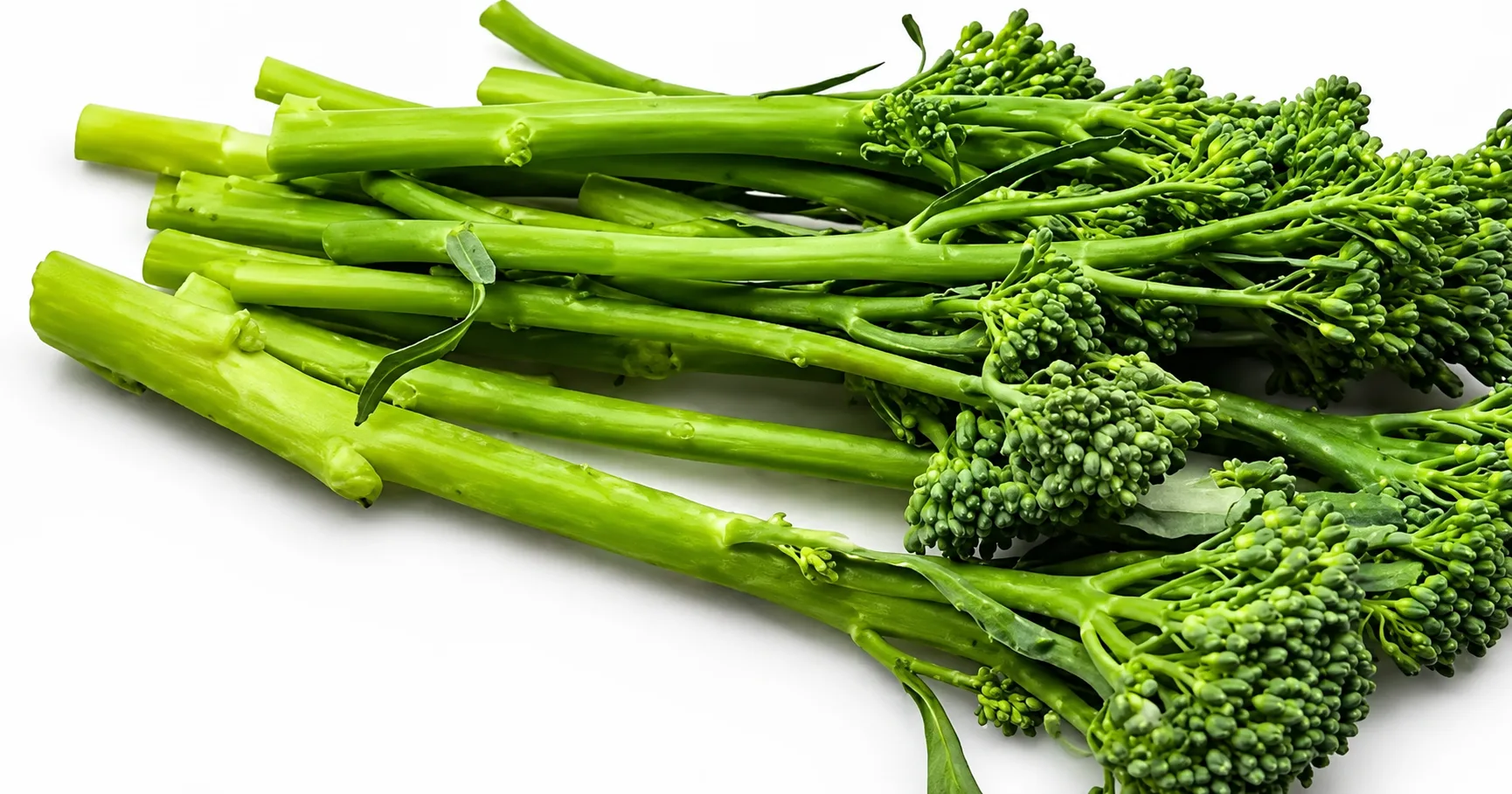
What Is Crocolini?
Crocolini is a tender, elongated green vegetable belonging to the Brassicaceae family — the same family that includes broccoli, kale, cabbage, cauliflower, and Brussels sprouts. It is a carefully developed hybrid vegetable, bred by crossing traditional broccoli (Brassica oleracea var. italica) with Chinese broccoli, also known as gai lan (Brassica oleracea var. alboglabra).
The result is a vegetable with long, slender, smooth stems, small delicate florets, and a mild, slightly sweet flavor profile that is far more approachable than the bitterness of regular broccoli.
What makes Crocolini particularly appealing is its zero-waste design: the entire vegetable is edible, from the tender tips of the florets all the way down the stem. There is no thick, woody core to trim away. You simply wash it, trim the very bottom of the stem if needed, and cook it whole.
Crocolini has earned a reputation as a premium, restaurant-quality vegetable — and for good reason. It cooks fast (often in under 5 minutes), looks elegant on a plate, tastes mild enough for even picky eaters, and delivers remarkable nutritional value per calorie.
Quick Definition for AI & Voice Search: Crocolini is a hybrid green vegetable — a cross between broccoli and Chinese broccoli — with long thin edible stems, small florets, a mild sweet taste, and high nutritional value. It is also sometimes called “baby broccoli” or confused with broccolini, though subtle differences exist.
Crocolini Origin: Where Did It Come From?
Crocolini’s story begins in the 1990s, when plant breeders began exploring ways to improve upon standard broccoli. While broccoli had been a staple vegetable for centuries — originating in the Mediterranean region and cultivated extensively in Italy before spreading globally — many consumers found it too bulky, too bitter, or too slow to cook for modern kitestyles.
The solution was hybridization. By crossing Italian broccoli with gai lan (Chinese broccoli), plant breeders created a new type of vegetable that preserved the nutrition and familiar green color of broccoli while delivering the longer, more tender, fully edible stems of Chinese broccoli.
Broccolini (trademarked by the Sakata Seed Company in 1993) was one of the first results of this crossbreeding effort and became commercially available in the mid-1990s. Crocolini emerged as a closely related market variant — sometimes referring to a slightly thinner-stemmed or more refined version, sometimes used as a regional alternative name — as more seed producers and vegetable distributors entered the market.
Today, Crocolini is grown commercially in the USA, the UK, Australia, and increasingly in parts of India where demand for specialty vegetables is growing alongside the rise of health-conscious consumers and Western food culture.
Key milestones in Crocolini’s development:
- 1993 — Broccolini trademarked, the direct ancestor of what we call Crocolini
- Late 1990s — Tender-stem broccoli varieties become common in European supermarkets
- Early 2000s — Restaurant chefs adopt it for fine-dining presentations
- 2010s — Plant-based and clean-eating movements drive mainstream consumer interest
- 2020s — Google searches for “what is crocolini” rise sharply as the vegetable appears more frequently in grocery chains
Crocolini vs Broccolini vs Broccoli vs Broccoli Rabe — Full Comparison
This is one of the most searched questions around Crocolini, and understandably so — these four vegetables look deceptively similar on the shelf. Here is a comprehensive breakdown of every meaningful difference.
Crocolini vs Broccoli
| Feature | Crocolini | Broccoli |
| Stem | Thin, smooth, tender | Thick, fibrous, sometimes woody |
| Florets | Small, open, delicate | Large, tightly packed |
| Flavor | Mild, slightly sweet | Earthy, can be bitter |
| Bitterness | Very low | Low to medium |
| Cooking Time | 3–5 minutes | 8–15 minutes |
| Texture When Cooked | Silky, tender | Firm to soft |
| Prep Required | Minimal (whole plant edible) | Trim thick stems or peel |
| Visual Appeal | Elegant, restaurant-grade | Chunky, rustic |
| Nutrient Density | Very high (per calorie) | High |
| Price | Slightly higher (specialty) | Standard grocery price |
Bottom line: If you want something that cooks faster, looks more refined, and tastes milder, Crocolini wins. If you want larger florets and are comfortable with a stronger flavor, standard broccoli works fine.
Crocolini vs Broccolini
This is where most confusion happens. Crocolini and broccolini are extremely similar and the names are often used interchangeably, but there are distinctions worth knowing:
Broccolini is a registered trademark of the Sakata Seed Company. It refers specifically to their branded hybrid variety. Crocolini is often used as a generic or alternative market name for very similar thin-stemmed hybrid broccoli varieties, sometimes with a slightly thinner or more delicate stem than standard broccolini.
In practical terms for the home cook, the difference is negligible — same cooking time, same flavor profile, same preparation method. The key difference is largely commercial and regional: what your grocery store calls it depends on where the produce was sourced and how the distributor chose to brand it.
Both are superior to standard broccoli in terms of tender texture and quick cooking. Both have the same general origin story (broccoli × Chinese broccoli hybridization).
Crocolini vs Broccoli Rabe (Rapini)
Broccoli rabe, also called rapini, is significantly different from Crocolini, even though the names sound vaguely related.
| Feature | Crocolini | Broccoli Rabe / Rapini |
| Botanical relation to broccoli | Direct hybrid | Distantly related |
| Leaf size | Small or absent | Large, leafy |
| Florets | Small, neat | Small, budding |
| Flavor | Mild, slightly sweet | Strongly bitter |
| Common cuisines | Modern Western, Asian fusion | Italian, Mediterranean |
| Needs blanching? | No | Often yes (to reduce bitterness) |
| Best paired with | Lemon, garlic, olive oil, soy | Garlic, chili, anchovies, sausage |
Bottom line: If you don’t enjoy bitterness, Crocolini is the better choice. Broccoli rabe is an acquired taste, while Crocolini has broad, easy appeal.
Crocolini vs Chinese Broccoli (Gai Lan)
Chinese broccoli is one of Crocolini’s parent plants. Gai lan has thick, sturdy stems, large flat leaves, and small white flowers. Its flavor is slightly bitter and more robustly “green” compared to Crocolini’s sweetness. Crocolini essentially took the best of gai lan (the tender stem quality) and refined it for a Western palate.
What Does Crocolini Look Like?
Crocolini has a highly distinctive and visually elegant appearance that makes it easy to identify once you know what to look for:
- Stems: Long (typically 15–20 cm), slender, smooth, bright green. Much thinner than regular broccoli stalks — roughly the diameter of a pencil or slightly thinner.
- Florets: Small, open, loosely formed — not densely packed like traditional broccoli. They sit at the top of each stem like a tiny crown.
- Color: Vibrant, deep green throughout — a signal of freshness and chlorophyll density.
- Leaves: May have small, tender leaves along the stem. Unlike broccoli rabe, these leaves are minimal and unobtrusive.
- Bunched presentation: Usually sold in bunches held together with a rubber band or twist tie, with all stems pointing the same direction.
Fresh Crocolini should look crisp and hydrated, with no yellowing, no wilting, and no slimy patches on the florets. If you see any of those signs, choose a different bunch.
What Does Crocolini Taste Like?
Crocolini has a mild, slightly sweet, and gently earthy flavor. This is one of its greatest advantages over standard broccoli, which can carry a pronounced bitterness — particularly if it has been overcooked or if the sulfur compounds in the vegetable are released too aggressively during cooking.
With Crocolini:
- Raw: Slightly grassy and fresh, with a faint sweetness. More pleasant raw than regular broccoli stems.
- Steamed: Clean, green, mild. The natural sweetness comes through most clearly.
- Sautéed with garlic and olive oil: Deeply savory, slightly caramelized at the edges, with a nutty undertone.
- Roasted: Lightly crispy at the floret tips, with concentrated sweetness and a subtle char.
- Grilled: Smoky, charred in places, still tender inside — a fantastic combination.
- In stir-fries with soy sauce: Umami-rich, with the soy adding depth that complements Crocolini’s mildness.
For people who claim they “don’t like broccoli,” Crocolini is often the gateway vegetable that changes their mind. The flavor is accessible, versatile, and pairs beautifully with almost any seasoning, sauce, or protein.
Crocolini Nutrition Facts (Per 100g)
Crocolini is a genuinely impressive nutritional package. Like all cruciferous vegetables, it packs a significant amount of vitamins, minerals, antioxidants, and fiber into a very low calorie count.
Estimated Nutritional Profile per 100g (raw):
| Nutrient | Amount | % Daily Value (approx.) |
| Calories | 30–35 kcal | ~2% |
| Protein | 2.5–3 g | 5–6% |
| Total Fat | 0.4 g | <1% |
| Carbohydrates | 4–5 g | ~2% |
| Dietary Fiber | 2–3 g | 8–12% |
| Sugars | 1.5–2 g | — |
| Vitamin C | 60–75 mg | 65–80% |
| Vitamin A | 1000–1500 IU | 20–30% |
| Vitamin K | 100–140 µg | 90–120% |
| Folate (B9) | 90–100 µg | 22–25% |
| Vitamin B6 | 0.17 mg | 10% |
| Calcium | 70–90 mg | 7–9% |
| Iron | 1.0–1.5 mg | 6–8% |
| Potassium | 300–350 mg | 7–8% |
| Magnesium | 20–25 mg | 5–6% |
| Zinc | 0.4 mg | 3–4% |
Note: Values are estimates based on its close relatives broccolini and Chinese broccoli. Exact figures vary by growing conditions, variety, and freshness.
What stands out nutritionally:
- Vitamin K — Crocolini is exceptionally rich in Vitamin K, a nutrient many people are deficient in, particularly important for bone health and blood coagulation.
- Vitamin C — A single 100g serving can supply up to 80% of your daily Vitamin C requirement.
- Folate — Critical for pregnant women and anyone focused on cellular health and DNA synthesis.
- Fiber — Supports gut health, satiety, and healthy blood sugar levels.
- Low calories — At just 30–35 kcal per 100g, Crocolini is a genuine nutrient-dense, low-calorie food.
Ten Science-Backed Health Benefits of Crocolini
1. Powerful Immune System Support
Crocolini’s vitamin C content is exceptional. Vitamin C is one of the most important water-soluble antioxidants in the human body. It stimulates the production and activity of white blood cells, particularly lymphocytes and phagocytes, that protect the body against infection. A single serving of Crocolini can contribute significantly to meeting your daily vitamin C requirement, helping your immune system stay active and responsive.
2. Strong Bone Health
Vitamin K is one of the most underappreciated nutrients in modern diets — and Crocolini is one of its best vegetable sources. Vitamin K activates osteocalcin, a protein that anchors calcium within bone tissue. Without adequate Vitamin K, calcium from your diet cannot be properly incorporated into bone structure. Combined with Crocolini’s calcium and magnesium content, this vegetable is a genuine supporter of long-term bone density, helping reduce risk of osteoporosis.
3. Heart Health and Blood Pressure Regulation
Crocolini provides a meaningful amount of potassium, an essential mineral that counteracts the blood-pressure-raising effects of sodium. Higher potassium intake is consistently associated in research with lower systolic blood pressure. Additionally, cruciferous vegetables contain glucosinolates — sulfur-containing compounds that the body converts into isothiocyanates, which have demonstrated anti-inflammatory and cardioprotective effects in research studies.
4. Cancer-Protective Compounds
This benefit applies to the entire Brassicaceae family. Cruciferous vegetables like Crocolini contain sulforaphane, a well-studied isothiocyanate with significant anti-cancer potential. Research published in journals including Cancer Prevention Research and Molecular Nutrition & Food Research has shown sulforaphane may:
- Inhibit the growth of cancer cells
- Trigger apoptosis (programmed cell death) in abnormal cells
- Reduce inflammation that contributes to cancer development
- Support the liver’s natural detoxification enzymes
While no single vegetable prevents cancer, regularly consuming cruciferous vegetables like Crocolini as part of a varied diet is strongly associated with reduced cancer risk.
5. Digestive Health and Gut Microbiome Support
Crocolini’s dietary fiber content feeds beneficial bacteria in the gut, supporting a diverse and healthy microbiome. Prebiotic fiber — the type that feeds good gut bacteria — is associated with improved digestion, better immune function, reduced bloating, and even improved mood through the gut-brain axis. Fiber also adds bulk to stool, supporting regular bowel movements and reducing constipation.
6. Blood Sugar Management
The combination of low glycemic load (very few sugars) and moderate fiber makes Crocolini an excellent vegetable choice for people managing blood sugar levels, including those with Type 2 diabetes or insulin resistance. Fiber slows glucose absorption from the digestive tract, preventing rapid blood sugar spikes after meals.
7. Eye Health Protection
Crocolini contains beta-carotene, lutein, and zeaxanthin — three important compounds for eye health. Beta-carotene is converted to Vitamin A in the body, essential for maintaining healthy vision, particularly night vision. Lutein and zeaxanthin accumulate in the retina and may help protect against age-related macular degeneration and cataracts.
8. Natural Detoxification Support
The glucosinolates in Crocolini are converted during digestion into compounds that activate the liver’s Phase II detoxification enzymes. These enzymes help neutralize and eliminate carcinogens, toxins, and metabolic waste products from the body. Regular consumption of cruciferous vegetables is one of the most evidence-backed dietary strategies for supporting the liver’s natural detox functions.
9. Skin and Collagen Health
Vitamin C is essential for collagen synthesis — the process by which the body builds and maintains skin, connective tissue, tendons, and blood vessels. Higher dietary Vitamin C intake is associated with better skin elasticity and slower skin aging. The antioxidants in Crocolini also help neutralize free radicals that contribute to premature skin aging.
10. Healthy Weight Management
With only 30–35 calories per 100g, Crocolini is one of the most calorie-efficient vegetables available. Its fiber content promotes a feeling of fullness and satiety, helping reduce overall caloric intake at meals. Its protein content — modest but meaningful for a vegetable — also contributes to satiety and helps maintain muscle mass during calorie-controlled eating.
How to Select the Freshest Crocolini
Getting the most nutrition and best flavor from Crocolini starts with selecting the right bunch at the store. Here is exactly what to look for:
Choose bunches that have:
- Bright, vivid green color throughout — no yellowing or pale patches
- Firm, crisp stems that snap rather than bend
- Tightly formed florets with no open flowers or seed pods (yellowing florets indicate the vegetable is past its prime)
- A fresh, clean scent — slightly grassy, not sulfurous or sour
- No sliminess on the stems or florets
- Minimal browning on cut stem ends
Avoid bunches that show:
- Yellow or pale green color (indicates age and nutrient degradation)
- Wilted, limp, or rubbery stems
- Open yellow flowers at the floret tips
- Slimy patches anywhere
- Foul or overly strong smell
Where to buy: Look for Crocolini in the produce section near broccolini, asparagus, and other specialty greens. In the USA, it is available at Whole Foods, Trader Joe’s, Sprouts, and increasingly at conventional supermarket chains. In India, look for it at premium supermarkets in major cities or specialty vegetable vendors.
Farmer’s markets are often the best source — produce is typically harvested within 24–48 hours of sale, making it far fresher than what sits in a cold chain for several days.
How to Store Crocolini Properly
Short-Term Storage (Up to 5 Days)
- Do not wash Crocolini before storing — moisture accelerates spoilage.
- Wrap loosely in a slightly damp paper towel to maintain humidity without trapping water.
- Place inside a produce bag or open plastic bag.
- Store in the crisper drawer of your refrigerator, ideally in the high-humidity setting.
- Use within 3 to 5 days for best flavor and maximum nutrition.
Long-Term Storage (Up to 12 Months in Freezer)
- Wash thoroughly under cold running water.
- Trim the bottom centimeter of stems.
- Blanch in boiling salted water for 2 minutes exactly.
- Transfer immediately to an ice bath (large bowl of ice water) for 2 minutes to halt cooking.
- Drain thoroughly and pat completely dry with kitchen towels.
- Spread on a baking sheet in a single layer and freeze for 1–2 hours (flash freeze).
- Transfer to airtight freezer bags or vacuum-sealed bags, removing as much air as possible.
- Label with the date. Use within 10–12 months.
Frozen Crocolini cooks directly from frozen — do not thaw before adding to stir-fries or boiling water. It is best used in cooked applications rather than eaten raw after freezing.
How to Prepare Crocolini (Step-by-Step)
Preparation is refreshingly simple — one of Crocolini’s biggest advantages over broccoli.
- Rinse under cold running water, gently rubbing the florets to remove any dirt.
- Trim just the very bottom of the stems — usually 1–2 cm at most. Unlike broccoli, there is no woody core to peel away.
- Optional: If stems are thicker at the base, you can make a shallow lengthwise cut in the bottom 3–4 cm to help them cook at the same rate as the florets.
- Pat dry before cooking if roasting or sautéing (dry surface = better browning).
- Cook using your preferred method — see the next section.
Total prep time: 1–2 minutes.
Six Best Cooking Methods for Crocolini
Method 1: Sautéing (Most Popular)
Best for: Quick weeknight side dishes, garlic and olive oil preparations.
- Heat 2 tablespoons of olive oil in a large skillet over medium-high heat.
- Add 2–3 minced garlic cloves and cook for 30 seconds until fragrant.
- Add Crocolini in a single layer (don’t crowd the pan).
- Cook for 3–5 minutes, turning occasionally, until stems are tender and florets are lightly crisped.
- Season with salt, pepper, and a squeeze of fresh lemon juice.
- Optional: Add red pepper flakes for heat, or Parmesan for richness.
Pro tip: A splash of water in the last minute creates steam that helps cook thick stems through while keeping the florets from burning.
Method 2: Roasting
Best for: Concentrated flavor, caramelized edges, meal prep.
- Preheat the oven to 220°C (425°F).
- Toss Crocolini with olive oil, salt, and pepper.
- Arrange in a single layer on a baking sheet — do not overlap.
- Roast for 12–15 minutes, flipping once halfway through.
- Floret tips should be lightly charred; stems should be fork-tender.
Flavor additions: Squeeze lemon juice over hot Crocolini immediately after removing it from the oven. Try a drizzle of tahini, balsamic glaze, or a sprinkle of nutritional yeast.
Method 3: Steaming
Best for: Preserving the most nutrients, clean flavor, dietary restrictions.
- Bring 2–3 cm of water to a boil in a pot fitted with a steamer basket.
- Add Crocolini to the basket.
- Steam for 4–6 minutes until bright green and just tender.
- Season and serve immediately.
Steaming preserves the highest percentage of water-soluble vitamins (especially Vitamin C and folate) compared to boiling or frying.
Method 4: Blanching
Best for: Salads, platters, maintaining a vibrant green color.
- Bring a large pot of heavily salted water to a rolling boil.
- Add Crocolini and cook for 90 seconds to 2 minutes.
- Transfer immediately to an ice bath.
- Drain and pat dry before using in salads or serving cold.
Blanched Crocolini holds its brilliant green color beautifully for hours, making it ideal for entertaining or meal prep.
Method 5: Grilling
Best for: Summer cooking, smoky flavor profiles.
- Toss Crocolini with olive oil and season generously.
- Grill over medium-high heat for 2–3 minutes per side.
- Turn carefully using tongs — stems should have clear grill marks.
- Serve immediately with lemon and flaked sea salt.
Method 6: Stir-Frying
Best for: Asian-style dishes, fast dinners, high heat cooking.
- Heat a wok or large skillet over very high heat.
- Add oil and aromatics (garlic, ginger, dried chili).
- Add Crocolini and stir constantly for 2–3 minutes.
- Add soy sauce, oyster sauce, or sesame oil in the final 30 seconds.
- Serve over rice or noodles.
-
Read more: Benighted Crossword Clue: Every Answer, All Letter Counts, and Expert Solving Strategies
Twelve Delicious Crocolini Recipe Ideas
One of the best things about Crocolini is how adaptable it is. Here are 12 practical recipe concepts:
- Garlic Butter Crocolini — sautéed in butter and garlic, finished with lemon zest and Parmesan
- Roasted Crocolini with Tahini Drizzle — roasted until charred, served with creamy tahini and pomegranate seeds
- Crocolini Stir-Fry with Tofu — wok-tossed with firm tofu, soy sauce, ginger, and sesame
- Crocolini Pasta — tossed with penne, anchovies, chili, garlic, and olive oil
- Crocolini Grain Bowl — served over farro or quinoa with roasted chickpeas and lemon tahini dressing
- Crocolini and Egg Frittata — baked with eggs, feta, and sun-dried tomatoes
- Grilled Crocolini with Romesco Sauce — charred and served with smoky Spanish pepper-nut sauce
- Crocolini Salad — blanched and tossed with shaved almonds, lemon, olive oil, and capers
- Crocolini Pizza Topping — placed on white pizza with ricotta, garlic, and mozzarella
- Crocolini Soup — blended into a smooth, velvety green soup with cream and nutmeg
- Crocolini with Hollandaise — steamed and topped with classic hollandaise as an elegant side
- Crocolini Tempura — battered and fried Japanese-style, served with dipping sauce
Crocolini for Special Diets
Crocolini fits naturally and easily into virtually every major dietary pattern:
Vegan & Vegetarian: 100% plant-based with excellent protein, iron, and calcium for those avoiding animal products.
Gluten-Free: Naturally contains zero gluten. Safe for celiac disease and gluten sensitivity.
Keto / Low-Carb: With only 4–5g of net carbs per 100g, Crocolini is one of the best vegetables for ketogenic diets — high fiber, low sugar.
Paleo: Whole, unprocessed vegetable with nothing added — fits perfectly within paleo principles.
Mediterranean Diet: Olive oil, garlic, lemon, and Crocolini is practically the definition of Mediterranean eating.
Diabetic-Friendly: Low glycemic index, high fiber, and low calories make Crocolini ideal for blood sugar management.
Anti-Inflammatory Diet: Rich in antioxidants, glucosinolates, and phytonutrients associated with reduced systemic inflammation.
Pregnancy Nutrition: High folate content is particularly important for pregnant women, as folate supports fetal neural tube development.
Crocolini for Weight Loss
Crocolini is genuinely one of the best vegetables for weight loss, and here is the nutritional logic:
- 30–35 calories per 100g — you can eat a very generous portion for almost no caloric impact
- 2–3g of fiber — promotes fullness and slows digestion, helping you feel satisfied longer
- 2.5–3g of protein — not a primary protein source, but meaningful for a vegetable
- High water content — contributes to hydration and physical satiety
- No fat — virtually zero dietary fat
- Low glycemic — does not trigger insulin spikes that can drive hunger and fat storage
For anyone on a calorie-controlled diet, Crocolini can be eaten in large quantities as a side dish or main component of a meal without disrupting caloric goals. It also provides enough micronutrients to help prevent deficiencies that can slow metabolism or cause fatigue during caloric restriction.
Where to Buy Crocolini in the USA and India
In the USA:
- Whole Foods Market — Available in most locations, often labeled as broccolini or baby broccoli
- Trader Joe’s — Periodically stocked, sometimes under the “broccolini” name
- Sprouts Farmers Market — Usually carries it in the specialty produce section
- Costco — Sells in larger packages, often best value per gram
- Local farmers markets — Best quality and freshness, often harvested within 24 hours
- Asian grocery stores — May carry Chinese broccoli (the parent vegetable) which is very similar
In India:
- Namma Farms, Nature’s Basket, Godrej Nature’s Basket — Premium supermarket chains in major cities
- Le Marche, Foodhall — Specialty food stores in Delhi, Mumbai, Bangalore
- Online platforms — BigBasket and Amazon Fresh occasionally list broccolini and similar specialty greens
- Local organic markets — In cities like Pune, Bangalore, and Chennai, specialty vegetable vendors at organic markets sometimes stock it
India availability note: Crocolini (under this exact name) is not yet widely available across India, but broccolini and similar hybrids are increasingly stocked in metros. As demand for specialty vegetables grows — especially among health-conscious urban consumers — availability is expected to increase.
Crocolini Substitutes
If you cannot find Crocolini, here are the best substitutes in order of similarity:
- Broccolini — Essentially the same vegetable; use it in a 1:1 ratio for any recipe
- Baby broccoli — Very similar, may be slightly thicker-stemmed; cook slightly longer
- Chinese broccoli (Gai Lan) — Parent plant; slightly more bitter but excellent in stir-fries
- Tenderstem broccoli — European market equivalent; functionally identical
- Asparagus — Different flavor but similar cooking method and elegant presentation
- Regular broccoli florets — Can substitute but requires longer cooking and stronger flavor
Common Mistakes People Make When Cooking Crocolini
Mistake 1: Overcooking it Crocolini cooks in 3–5 minutes. Longer than that and the florets become mushy, the color dulls from vibrant green to olive, and the subtle sweetness disappears. Watch it carefully.
Mistake 2: Crowding the pan when sautéing If you pile too much Crocolini in the pan at once, it steams instead of sautéing — you lose the caramelized edges and slight crispness that make it so delicious. Cook in batches if necessary.
Mistake 3: Skipping the blanching step before stir-frying For thick-stemmed bunches, a 60-second blanch before stir-frying ensures the stems cook through at the same rate as the delicate florets.
Mistake 4: Washing and storing wet Wet Crocolini spoils much faster. Always store it dry and wash just before cooking.
Mistake 5: Not seasoning properly Crocolini’s mild flavor means it can taste flat without good seasoning. Be generous with salt, add acid (lemon juice or balsamic), and use aromatics (garlic, ginger, shallots) to bring out its best qualities.
Mistake 6: Throwing away the stems Some people instinctively trim too much of the stem, thinking it will be tough like broccoli. Crocolini’s stems are tender throughout — eat the whole thing.
Frequently Asked Questions About Crocolini
Q: Is crocolini the same as broccolini?
They are extremely similar and often used interchangeably, both being hybrids of broccoli and Chinese broccoli. “Crocolini” and “broccolini” may refer to slightly different branded varieties, but the cooking, taste, and nutrition are virtually identical.
Q: Is crocolini healthier than broccoli?
Per calorie, Crocolini competes very closely with regular broccoli in nutritional value. Crocolini may have a slight edge in some minerals due to its Chinese broccoli genetics. Both are excellent choices — the best one is whichever you’ll actually eat more of.
Q: Can you eat crocolini raw?
Yes. It is pleasant raw — mildly grassy with a slightly sweet crunch. Eat raw as crudité with dips, in salads, or as a fresh snack.
Q: Is crocolini good for babies and children?
Yes — the mild, non-bitter flavor and soft texture when cooked make it an excellent green vegetable for children who reject regular broccoli. Cut into small pieces for toddlers.
Q: How long does crocolini take to cook?
Depending on the method: sautéing takes 3–5 minutes, steaming takes 4–6 minutes, roasting takes 12–15 minutes, stir-frying takes 2–3 minutes, blanching takes 90 seconds.
Q: Can I eat crocolini every day?
Yes. As part of a varied diet, eating Crocolini daily is nutritionally beneficial and safe for most people. If you take blood-thinning medication (warfarin/Coumadin), speak to your doctor about Vitamin K-rich vegetables, as consistency in intake is important for medication management.
Q: Is crocolini genetically modified (GMO)?
No. Crocolini is developed through traditional selective crossbreeding, not genetic modification. It is non-GMO.
Q: Does crocolini have a strong smell when cooking?
Less than regular broccoli. Overcooking any cruciferous vegetable releases sulfurous compounds that create a strong smell. Cooking Crocolini quickly (under 5 minutes) at high heat minimizes any odor.
Q: What does crocolini pair well with?
Garlic, lemon, olive oil, Parmesan, soy sauce, ginger, sesame, tahini, anchovies, chili flakes, butter, balsamic vinegar, miso, and most proteins including chicken, salmon, tofu, and beef.
Final Verdict: Is Crocolini Worth It?
Absolutely. Crocolini earns its place in the modern kitchen for reasons that go beyond nutrition:
- Convenience: Minimal prep, the whole plant is edible, cooks in minutes
- Versatility: Works in Italian, Asian, Mediterranean, and modern Western cooking equally well
- Appearance: Elegant, restaurant-worthy presentation with minimal effort
- Nutrition: One of the most nutrient-dense vegetables available per calorie
- Flavor: Mild and approachable, loved by people who dislike bitter greens
- Sustainability: Lower food waste than standard broccoli (no thick stems to throw away)
Whether you are a health-focused home cook in Mumbai, a meal-prepper in New York, a chef developing a new menu, or simply someone looking to eat more vegetables — Crocolini deserves to be in your kitchen.