








If you’ve come across the word piçada and aren’t sure what it means, you’re not alone. It’s a Portuguese term with more than one meaning, and the spelling alone trips up most English speakers. This article breaks down every definition of piçada — the slang use, the literal use, the culinary connections, and why it keeps showing up in searches by people expecting very different answers.
What does piçada mean in Portuguese?
The word piçada has two distinct meanings that exist in separate contexts, and confusing them is easy if you don’t know what you’re looking for.
The most commonly searched meaning in 2026 is the slang use: a sharp verbal reprimand or a pointed comment meant to correct, embarrass, or tease someone. Think of it as a verbal sting — delivered by a parent, a boss, a friend, or a stranger online. Portuguese dictionaries including Priberam and Infopédia list it as a colloquial noun associated with scolding.
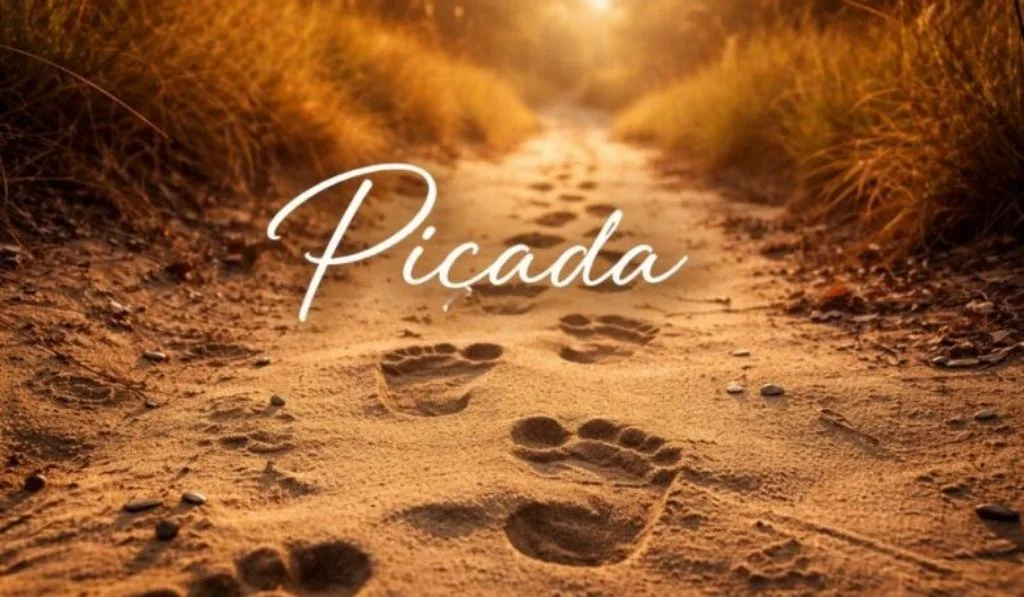
The second meaning is more literal: a footstep, footprint, or the trace left behind by repeated foot traffic on soft ground. This meaning comes from a different etymological root and is used mostly in rural, nature-based, or literary contexts.
| Meaning | Context | Root verb |
| Verbal reprimand / sharp rebuke | Slang, everyday conversation | picar (to prick, to sting) |
| Footprint / worn trail | Rural, literary, nature | pisar (to step, to tread) |
| Narrow forest path | Brazilian regional usage | pisar |
Where does the slang meaning come from?
The slang piçada connects to the verb picar, which runs through several Romance languages. In Portuguese, Spanish, and Catalan, picar means to prick, to sting, or to chop. From that verb, piçada developed its meaning of a sharp verbal action — something that stings, like a bee, even if no physical contact happens.
The cedilla (the hook under the “c” that makes it a “ç”) is what separates piçada from picada. That small character changes both pronunciation and meaning entirely. When you see the ç, you’re reading a Portuguese word with a specific set of meanings. Without it, you’re in different linguistic territory.
The slang use is informal, rarely appearing in professional writing. It lives in conversation, social media, and storytelling.
Piçada vs picada: a confusion worth clearing up
This is where American searchers often land in the wrong place. These two words look nearly identical, but they are not the same word.
- Piçada (with ç) is Portuguese. It means a verbal reprimand or, in older/rural usage, a footprint or trail.
- Picada (without ç) is Spanish. Depending on the country, it means an insect bite or sting, a shared appetizer platter (Argentina, Colombia), or chopped ingredients used in cooking.
| Word | Language | Common meaning |
| Piçada | Portuguese | Slang rebuke; footprint |
| Picada | Argentine/Colombian Spanish | Shared snack board; appetizer platter |
| Picada | Catalan | Garlic-almond paste added to stews |
| Picada | General Spanish | Insect bite or sting |
If you searched for the word after seeing it in a conversation or on social media, you were almost certainly reading the Portuguese piçada. If you were reading a menu from Argentina or a Catalan recipe, you encountered picada — a different word entirely.
How piçada is used in everyday Portuguese conversation
In Portugal, piçada is used to describe a sharp correction. A friend who shows up two hours late might get a piçada from the group. A student who gives a wrong answer in class might feel the piçada from a teacher. It’s firm, often embarrassing, but not necessarily cruel.
The tone shifts depending on who’s delivering it and how:
- Between close friends, a piçada can feel more like a tease than a real scolding.
- From an authority figure, it lands harder — a formal correction with a sting attached.
- In online conversations, especially on social media, piçada has taken on a lighter, sometimes humorous tone.
In Brazil, the word appears less often in everyday speech. Brazilian Portuguese has its own rich slang vocabulary, and piçada tends to get replaced by other expressions. When it does show up in Brazilian conversations, it usually leans playful rather than serious.
The literal meaning: footprints and forest paths
In non-slang usage, piçada connects to the verb pisar, meaning to step or to tread. Here, it describes the physical mark that stepping leaves behind.
In rural Portugal and parts of Brazil, piçada can refer to:
- Footprints left in mud, sand, or soft earth
- Narrow trails formed naturally by animals or people walking the same route repeatedly
- Evidence of passage through a natural space, useful to farmers and hunters
This use is older and more formal. You’ll find it in literary writing, nature journalism, and regional speech more than in casual urban conversation. A writer describing forest ground might reference the piçadas left by deer. A hunter might read piçadas in the earth to track wildlife.
Read more: What is uncuymaza? The Andean concept that’s quietly shaping food, art, and leadership in 2026
Piçada in literature and symbolic use
Portuguese and Brazilian writers have used piçada in its metaphorical form for decades. In reflective or narrative writing, a piçada can represent more than a footstep or a scolding.
It can stand for the trace someone leaves on another person’s life. A mentor’s influence. A relationship’s mark on your personality. The path worn by habit or memory. This broader symbolic use gives the word emotional weight that a simple dictionary entry can’t fully capture.
In poetry, piçada sometimes appears in the same breath as concepts like memory, loss, and identity — the idea that every person and every experience leaves something behind, visible or not.
Piçada and the Romance language family
Understanding piçada becomes easier when you see it as part of the larger Romance language family, which includes Portuguese, Spanish, Catalan, Italian, French, and Romanian. These languages all developed from Vulgar Latin, and many share verb roots that produce similar-sounding but differently-meaning words.
The root verb picar, for example, appears in multiple languages and carries the core idea of a sharp, pointed action. Over centuries, that idea branched out into physical sensations (a sting, a prick), culinary actions (chopping, mincing), and social meanings (a sharp remark, a correction). Portuguese developed its own path, adding the cedilla and the specific slang connotation that makes piçada recognizable today.
This kind of word evolution — where one Latin root produces different words across modern languages — is studied in the field of historical linguistics and shows how deeply connected the cultures of southwestern Europe and Latin America remain.
Final thoughts
Piçada is a small word that holds a surprising amount of meaning. Whether you came across it in a Portuguese conversation, a Brazilian text message, or a social media post, what you were reading was almost certainly the slang form: a sharp verbal correction with varying degrees of sting depending on context and tone.
The confusion with picada (the Spanish-language appetizer board or insect bite) is understandable, but that one character — the cedilla — makes all the difference. Language often works that way. A tiny mark on a letter, and you’re in entirely different cultural territory. Piçada is a good reminder that learning any language means learning the details, not just the sounds.
Frequently asked questions
What does piçada mean in English?
Piçada most often translates to a sharp verbal reprimand or scolding in everyday Portuguese slang. In older or rural contexts, it can also mean a footprint, a footstep, or a narrow trail worn into the ground by repeated foot traffic.
Is piçada the same as picada?
No. Piçada (with the cedilla under the c) is a Portuguese word. Picada (without the cedilla) is Spanish and Catalan, where it refers to an insect sting, a shared appetizer platter, or a sauce base depending on the country. The spelling difference is small but the meaning is entirely different.
Is piçada vulgar or offensive?
It depends on context. In standard everyday Portuguese, piçada means a verbal correction or sharp remark and is not vulgar. In some informal or online usage, it can carry stronger or more crude connotations. Tone, setting, and relationship between speakers all affect how the word lands.
How is piçada used differently in Portugal and Brazil?
In Portugal, piçada is well understood as slang for a sharp rebuke and appears regularly in casual speech. In Brazil, the word is used less frequently in daily conversation, and when it does appear, it tends to carry a lighter, more playful or teasing tone rather than a strict scolding.
Where does the word piçada come from?
The slang form connects to the Portuguese verb picar, meaning to prick or to sting. The literal footprint meaning traces back to pisar, meaning to step or to tread. Both verbs have Latin roots shared across the Romance language family, which explains why similar-sounding words appear in Spanish, Catalan, and other related languages.
Can piçada refer to a trail or path?
Yes. In rural and regional usage, especially in Portugal and parts of Brazil, piçada can describe a narrow path worn naturally into the ground by people or animals walking the same route repeatedly. This usage is more common in older speech, nature writing, and literary contexts than in modern urban conversation.