








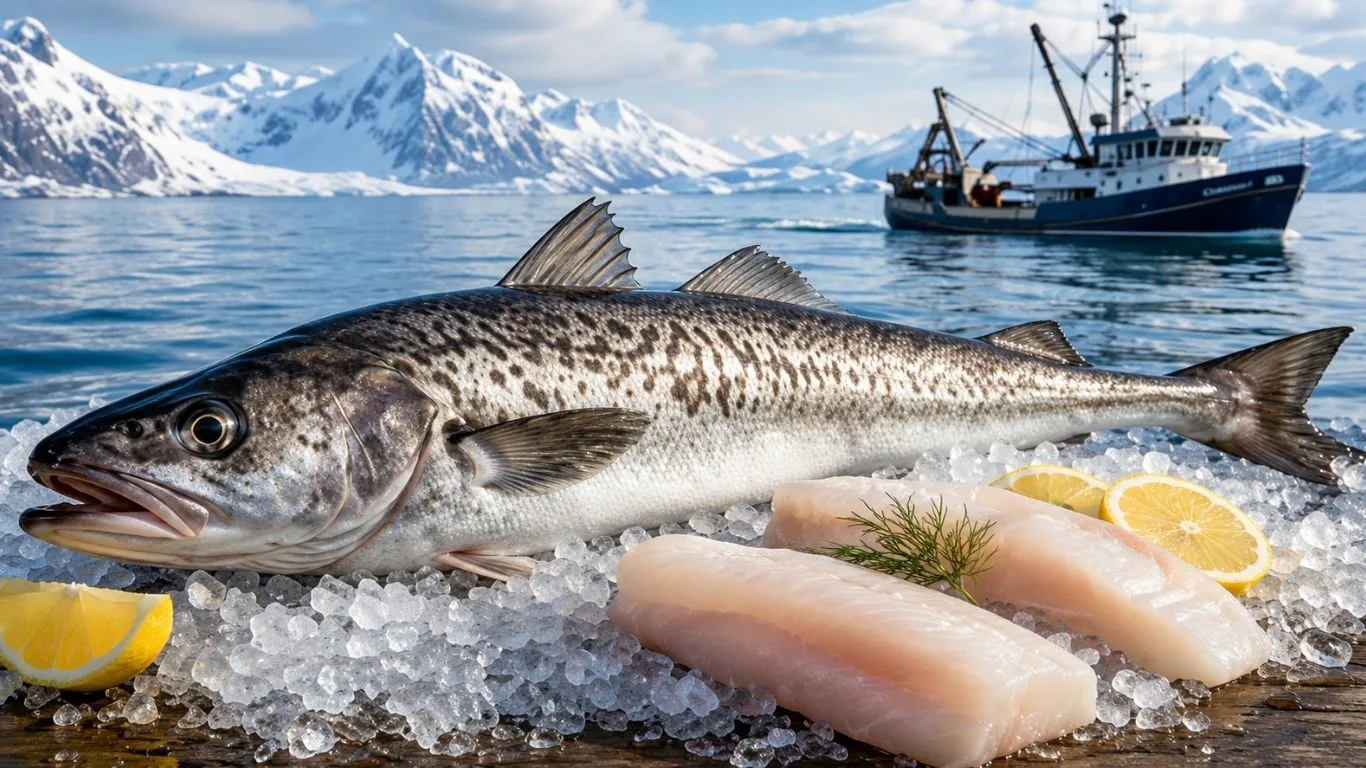
Most people have eaten alaskan seiti without ever knowing its name. It appears in fish sticks, fast-food sandwiches, frozen fillets, and imitation crab products sold in supermarkets across the world. Yet despite being one of the most consumed fish species on the planet, alaskan seiti remains largely unknown to everyday shoppers.
That gap between consumption and awareness is exactly what this guide addresses. From its origins in the icy waters of the North Pacific to its role in modern nutrition and sustainable fishing, this is the most complete guide to alaskan seiti available in 2026.
What Is Alaskan Seiti?
Alaskan seiti is the market name used in several European and international markets for Alaska pollock, a whitefish scientifically classified as Gadus chalcogrammus. It belongs to the cod family and lives in the cold, deep waters of the North Pacific Ocean, particularly in the Bering Sea and surrounding Alaskan waters. The name varies by region.
In Finland and some Scandinavian markets, it is commonly sold under the term alaskan seiti. In the United Kingdom, Germany, Japan, and the United States, it is more frequently labelled as Alaska pollock or walleye pollock.
Regardless of the name used, alaskan seiti refers to the same species. It has white, flaky flesh, a mild and delicate flavor, and a texture that adapts well to dozens of cooking methods and food manufacturing processes. These qualities have made it one of the most commercially significant fish in the world.
Origin and Natural Habitat
Alaskan seiti thrives in the cold, nutrient-rich waters of the North Pacific. Its primary habitat spans the Bering Sea, the Gulf of Alaska, and the Aleutian Islands. The fish typically lives between 100 and 300 metres below the surface, schooling in large groups in midwater and near the ocean floor.
Alaska pollock can live up to 15 years and grow to a length of approximately 100 centimetres. It is a schooling fish, which means it gathers in enormous groups, making it highly accessible for commercial trawling operations. The cold, clean, remote waters of Alaska contribute to the fish’s natural purity. Its flesh is free from the contaminants often found in warmer coastal waters, and it contains exceptionally low levels of mercury.
The fish feeds on crustaceans, small fish, and zooplankton. Its position in the marine food chain as a mid-level predator means it does not accumulate the heavy metal concentrations found in larger predatory species such as swordfish or tuna.
History and Commercial Rise of Alaskan Seiti
The commercial fishing of alaskan seiti began in earnest during the mid-twentieth century, driven primarily by Soviet and Japanese fishing fleets operating in the North Pacific. As global demand for affordable protein grew through the 1960s and 1970s, alaskan seiti became a primary target for large-scale trawling operations.
The United States took formal control of its exclusive economic zone in 1977 through the Fishery Conservation and Management Act, which extended jurisdiction to 200 nautical miles offshore. This move redirected the fishery largely into American hands and established the regulatory framework that governs alaskan seiti fishing to this day. The fishery rapidly expanded throughout the 1980s and became the largest fishery in the United States by volume.
Today, alaskan seiti is recognised as the second largest fishery in the world by catch volume. According to NOAA Fisheries, the Alaska pollock fishery is worth an estimated $1.9 billion and supports nearly 30,000 jobs across the United States. Annual catch volumes range from 1 million to 1.4 million metric tonnes, representing one of the most significant protein harvests in global seafood production.
Nutritional Profile of Alaskan Seiti
One of the strongest reasons for the continued popularity of alaskan seiti is its outstanding nutritional profile. It is a genuinely exceptional source of lean protein with minimal fat and very low calories.
The following table shows the nutritional breakdown of alaskan seiti per 100 grams of raw fish, based on USDA data and verified nutritional sources.
| Nutrient | Amount per 100g | % Daily Value |
| Calories | 92 kcal | Low |
| Protein | 19.4 g | 34% |
| Total Fat | 0.5 to 1 g | Very Low |
| Carbohydrates | 0 g | 0% |
| Omega-3 Fatty Acids | 500 mg | Significant |
| Vitamin B12 | Over 50% DV | High |
| Selenium | 44 mcg | 80% DV |
| Phosphorus | Good source | Moderate |
| Mercury Level | 0.031 ppm | Extremely Low |
The US Food and Drug Administration places alaskan seiti in its “Best Choice” category for mercury levels, confirming it is safe for regular consumption by adults, children, and pregnant women alike. Its complete amino acid profile means the protein it provides is fully usable by the human body for muscle maintenance, immune support, and tissue repair.
Key Health Benefits of Alaskan Seiti

The nutritional data above translates into a range of concrete health benefits. These are supported by scientific research and the consensus of leading nutrition and dietary health organisations.
Heart Health Support: Omega-3 fatty acids found in alaskan seiti, specifically DHA and EPA, have been studied extensively for their role in reducing cardiovascular risk. The GISSI Prevention Trial, one of the most cited studies in cardiac nutrition research, found that regular omega-3 intake from fish sources was associated with a reduced risk of repeat heart attacks and sudden cardiac death. Alaskan seiti provides a meaningful dose of these fatty acids with every serving.
Lean Protein for Muscle and Weight Management: With approximately 20 grams of protein per 100-gram serving and fewer than 100 calories, alaskan seiti is one of the most efficient protein sources available. It suits athletes, weight-loss programmes, high-protein diets, and general fitness goals equally well. Its near-zero fat content makes it particularly valuable for calorie-controlled eating plans.
Vitamin B12 for Brain and Nerve Health: A single serving of alaskan seiti provides more than half of the recommended daily intake of vitamin B12. This vitamin is essential for red blood cell production, neurological function, and DNA synthesis. Many people, particularly older adults and those following plant-based diets, struggle to meet their B12 requirements. Alaskan seiti offers a practical and natural source.
Selenium for Immune and Thyroid Function: Alaskan seiti provides approximately 80 percent of the daily recommended value of selenium per 100-gram serving. Selenium is a powerful antioxidant mineral that supports immune response, protects cells from oxidative damage, and plays a critical role in thyroid hormone metabolism. Regular consumption of selenium-rich foods is associated with improved metabolic health and reduced inflammation.
Mercury Safety: Because alaskan seiti is a smaller, mid-level predator in the food chain, it does not accumulate high concentrations of mercury in the way that large predatory fish do. At just 0.031 parts per million, it is one of the safest fish for frequent consumption. Health authorities recommend two to three servings of seafood per week, and alaskan seiti meets this recommendation without safety concerns.
Culinary Uses and Cooking Methods
Alaskan seiti is one of the most versatile fish in the kitchen. Its mild, neutral flavor means it absorbs herbs, spices, sauces, and marinades without competing with other ingredients. Its firm but delicate texture holds up well across a wide range of cooking methods.
Baking: Baked alaskan seiti fillets with lemon, garlic, and fresh herbs is one of the cleanest and most nutritionally efficient preparations. Baking preserves the omega-3 content and keeps calorie counts low.
Pan-frying: Lightly pan-fried with olive oil and seasoning, alaskan seiti develops a crisp exterior while remaining moist inside. This method works particularly well for fish tacos and sandwiches.
Steaming: Steaming is the gentlest cooking method and suits Asian-inspired preparations well. Alaskan seiti pairs naturally with soy, ginger, sesame, and fresh chili.
Grilling: Thicker fillets hold up well on a grill, picking up charred, smoky flavors. Marinating in citrus and herbs before grilling enhances the natural mild sweetness of the fish.
Breading and frying: The classic fish-and-chip preparation is popular in the UK and Germany. Alaskan seiti’s firm white flesh makes it ideal for breading and frying, producing the consistent results required by commercial food manufacturers.
Surimi production: Alaskan seiti is the primary raw material for surimi, the processed seafood paste used to make imitation crab sticks and related products. Its clean taste, light color, and excellent gel-forming properties make it the preferred species for this application globally.
Read also: Lamps4u review: what you need to know about this UAE lighting brand before buying
Alaskan Seiti vs Other Whitefish: A Direct Comparison
Understanding how alaskan seiti compares to other popular whitefish helps consumers and buyers make informed choices.
| Feature | Alaskan Seiti | Cod | Haddock | Tilapia |
| Protein per 100g | 19.4 g | 17.8 g | 18.9 g | 20.1 g |
| Calories per 100g | 92 kcal | 82 kcal | 87 kcal | 96 kcal |
| Fat Content | Very Low | Very Low | Low | Low |
| Omega-3 Content | 500 mg | 158 mg | 200 mg | 115 mg |
| Mercury Level | Very Low | Low | Low | Very Low |
| MSC Certified | Yes | Varies | Varies | No |
| Flavor Profile | Mild, neutral | Mild | Slightly sweet | Mild, earthy |
| Best For | Versatile cooking | Fish and chips | Smoked dishes | Grilling |
| Price | Affordable | Moderate | Moderate | Affordable |
Alaskan seiti compares favorably across nearly every category, particularly in omega-3 content, sustainability certification, and commercial versatility. Its combination of low price and high nutritional value makes it one of the strongest options in the whitefish category.
Sustainability and MSC Certification
The sustainability credentials of alaskan seiti are among the strongest of any commercial fish species in the world. In March 2026, the Alaska pollock fishery received formal recertification under the Marine Stewardship Council (MSC) Fisheries Standard, reaffirming its status as a responsibly managed and sustainable seafood resource. The fishery has maintained continuous MSC certification since 2005, making it one of the longest-running certified sustainable fisheries globally.
The Alaska pollock fishery is the largest MSC-certified fishery in the world. It operates under one of the most comprehensive fisheries management systems ever developed, featuring strict annual catch limits, real-time monitoring of fish stocks, and robust bycatch controls. Annual catch volumes are set at approximately 50 percent of the acceptable biological catch, leaving a substantial buffer to protect stock health and ecosystem balance.
Bycatch of non-target species is held to less than one percent through the use of selective mid-water pelagic fishing trawls. The fishery is also certified by the Certified Seafood International (CSI) programme and recognised by the Global Sustainable Seafood Initiative (GSSI), which benchmarks seafood certification against the United Nations Food and Agriculture Organization’s standards.
In addition to ecological sustainability, the Alaska pollock fishery has been assessed for its carbon footprint. Results show that wild alaskan seiti delivers more protein per kilogram of greenhouse gas emissions than most other animal protein sources, including beef, poultry, and farmed salmon. This positions alaskan seiti as not only a sustainable seafood choice but one of the most environmentally efficient sources of protein available anywhere.
Matt Tinning, CEO of the At-sea Processors Association, stated in March 2026 that the recertification reflects decades of responsible management and a shared commitment to ensuring alaskan seiti continues to set the standard for sustainable fisheries worldwide.
Global Market Presence and Economic Importance
Alaskan seiti plays a central role in the global seafood economy. It is one of the top five most consumed fish per capita in the United States. In Germany, it is the single most consumed fish species. Japan is a major market for alaskan seiti, primarily in surimi and kamaboko products. The United Kingdom, Scandinavia, and Eastern Europe are also significant consumption markets.
The fishery supports nearly 30,000 jobs in the United States alone, spanning fishing, processing, transportation, and retail. Its economic contribution extends further through global supply chains, as alaskan seiti products reach consumers in dozens of countries through both fresh and processed seafood channels.
Who Should Eat Alaskan Seiti?
Alaskan seiti suits a remarkably wide range of dietary needs and lifestyles.
Athletes and fitness enthusiasts benefit from its high protein content and low calorie profile. People managing their weight appreciate its extremely low fat content and nutrient density. Children respond well to its mild flavor, and its nutritional profile supports healthy development.
Older adults gain from its B12 content, which supports nerve health and energy levels. Pregnant women can eat alaskan seiti regularly without mercury concerns, as confirmed by FDA guidance. Budget-conscious shoppers find alaskan seiti consistently more affordable than premium fish species like salmon or cod while receiving comparable or superior nutritional benefits.
How to Buy Alaskan Seiti: What to Look For
When purchasing alaskan seiti, consumers should prioritise a few key indicators of quality.
Look for the blue MSC ecolabel on packaging, which confirms the product comes from a certified sustainable fishery. Choose wild-caught over farmed wherever possible, as wild alaskan seiti from Alaskan waters offers the cleanest and most nutritionally complete profile.
Check the country of origin label. Genuine alaskan seiti originates from the Bering Sea, Gulf of Alaska, or Aleutian Islands. Frozen fillets should be individually quick-frozen at sea where possible, as this method preserves freshness and nutritional integrity better than shore-based freezing.
Frequently Asked Questions
What is alaskan seiti?
Alaskan seiti is the market name used in several European markets for Alaska pollock, a whitefish from the cod family harvested in the cold waters of the Bering Sea and North Pacific Ocean.
Is alaskan seiti healthy to eat?
Yes. Alaskan seiti is one of the healthiest fish available. It provides around 20 grams of protein per 100-gram serving, is very low in fat and calories, and is rich in vitamin B12, selenium, and omega-3 fatty acids. It also contains extremely low mercury levels.
What does alaskan seiti taste like?
Alaskan seiti has a mild, neutral, and slightly sweet flavor with soft white flaky flesh. It takes on the flavors of herbs, spices, and sauces well, making it suitable for a wide range of recipes.
Is alaskan seiti the same as cod?
No. Alaskan seiti and cod are related species from the same family but are distinct fish. Alaskan seiti is scientifically known as Gadus chalcogrammus, while Atlantic cod is Gadus morhua. Alaskan seiti is generally smaller and milder in flavor.
Read also: Maha225.online-Win: Complete Review And Hidden Risks