








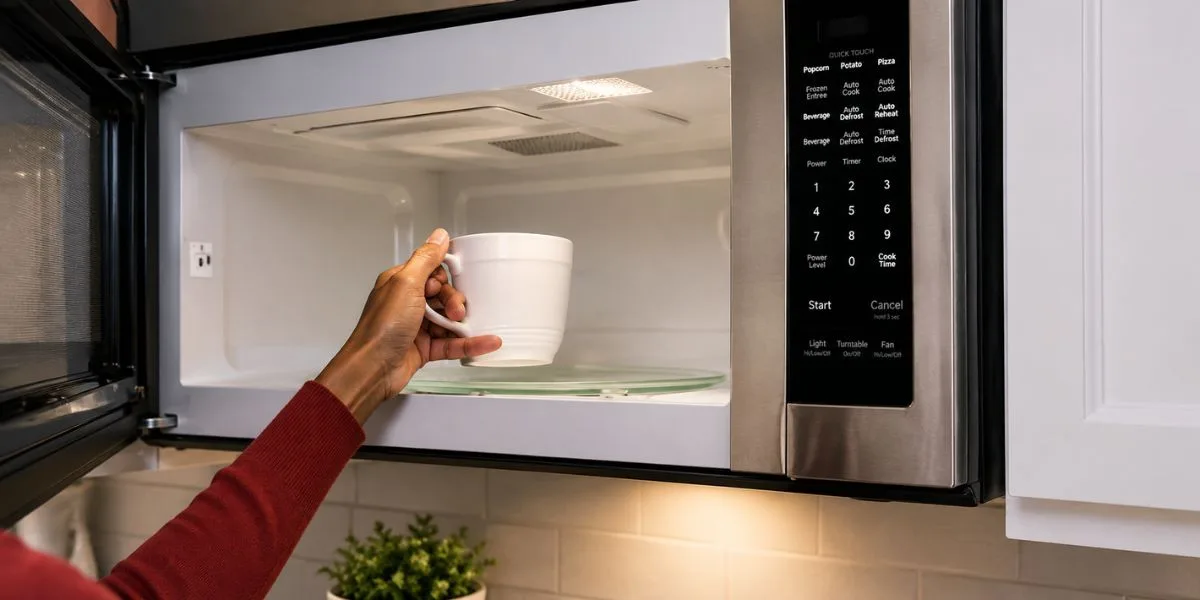
If you have searched for “Microwey” and landed here, you are probably trying to figure out exactly what the term refers to. Is it a brand? A new appliance? A type of technology? This guide breaks down everything connected to Microwey, including what the term means, how the underlying microwave technology actually works, how it compares to traditional microwaves, what features matter most, safety considerations, and how to choose the right appliance for your kitchen in 2026.
By the end of this article, you will have a clear, practical understanding of Microwey and the smart microwave category it represents, without the confusing jargon that often comes with appliance marketing.
What Does Microwey Mean?
Microwey is best understood as a term used to describe the next generation of microwave ovens, ones built around smart sensors, automated cooking programs, and energy efficient operation. Rather than referring to one specific manufacturer or single product, it represents a broader shift in how microwave appliances are designed and marketed for modern kitchens.
Traditional microwaves have not changed much in decades. You set a power level, set a time, and hope the food comes out evenly heated. Microwey style appliances aim to fix the inconsistencies that have frustrated users for years by adding sensors, smarter algorithms, and more intuitive controls.
In simple terms, if a regular microwave is like a basic calculator, a Microwey style appliance is closer to a smartphone. Same core function, but with far more intelligence built in.
Why Are People Searching for Microwey?
Search interest in terms like Microwey usually comes from a mix of curiosity and practical need. People are dealing with real kitchen frustrations such as food that is scalding on the outside but frozen in the middle, electricity bills that creep up from inefficient appliances, and a general desire for kitchen gadgets that actually save time rather than adding extra steps.
At the same time, 2026 has seen a wave of interest in smart home devices generally. Kitchens are one of the last rooms in many homes to get a meaningful tech upgrade, so when a term suggesting “smart microwave” starts trending, people naturally want to know if it is worth paying attention to.
How Microwave Cooking Actually Works
To understand whether Microwey style technology is genuinely useful, it helps to understand how microwave ovens work in the first place.
The Science of Microwave Heating
Microwave ovens use electromagnetic radiation in the microwave frequency range, typically around 2.45 gigahertz. This frequency was chosen specifically because it interacts efficiently with water molecules.
When microwaves pass through food, they cause water, fat, and sugar molecules to vibrate rapidly. This vibration generates friction at a molecular level, and that friction produces heat. Unlike a conventional oven, which heats the air around the food and slowly transfers warmth inward from the outside, a microwave generates heat directly inside the food itself, wherever those molecules are present.
This is also why microwaves are non-ionizing radiation. Unlike X-rays or gamma rays, microwave energy does not carry enough energy per photon to knock electrons loose from atoms or damage DNA. It simply causes molecular movement, which we experience as heat. Once the appliance is switched off, the energy disappears completely. Food does not become radioactive and does not retain any residual radiation.
Why Regular Microwaves Heat Unevenly
If you have ever pulled a bowl of soup out of the microwave only to find the edges boiling and the center still cold, you have experienced one of the most common complaints about traditional microwave technology.
This happens for a few reasons. Microwave energy does not distribute perfectly evenly inside the cooking chamber, which creates what are commonly called hot spots and cold spots. Denser or thicker foods absorb energy at different rates than thinner portions, meaning the outer edges of a dish often heat faster than the middle. Moisture content also plays a role, since areas with more water content absorb more microwave energy and heat up faster than drier sections of the same dish.
Rotating turntables help reduce this problem somewhat, but they do not solve it entirely, especially for irregularly shaped containers or dense foods like lasagna or thick stews.
How Smarter Microwave Technology Improves on This
This is where the Microwey style approach comes in. Instead of relying purely on a fixed timer and power level, smart microwave systems use sensors that monitor humidity, steam output, and sometimes weight to continuously adjust cooking in real time.
For example, a sensor might detect that steam is being released faster than expected, signaling that the food is heating up quickly, and automatically reduce power to prevent overcooking. Similarly, some systems use inverter technology, which allows for a continuous stream of variable power rather than the older cycling on and off approach most basic microwaves use. This means food gets a steady, more even level of energy throughout the cooking process instead of alternating between full power and no power.
Microwey vs Traditional Microwave: A Practical Comparison
Here is how a smart, Microwey style microwave generally compares to a basic traditional model.
| Factor | Microwey Style (Smart Microwave) | Traditional Microwave |
| Heating consistency | Sensor adjusted, fewer cold spots | Often uneven, relies on fixed timers |
| Power delivery | Inverter based, continuous power levels | On/off cycling at fixed power |
| Cooking programs | Multiple presets for specific foods | Basic presets or none at all |
| Energy use | Optimized based on food and steam detection | Fixed energy use regardless of food |
| Noise level | Often quieter due to improved fan design | Can be louder, especially older units |
| Price | Generally higher upfront cost | Lower upfront cost |
| Learning curve | Slight, due to extra features | Minimal, very simple controls |
| Best for | Daily cooking, reheating, defrosting frequently | Occasional, basic reheating |
If you use your microwave only a few times a week for simple reheating, the difference may not justify the extra cost. If you rely on it daily for meals, defrosting, and reheating a variety of foods, the improvements in consistency and energy use can add up over time.
Key Features Worth Looking For
When evaluating any microwave marketed under smart or Microwey style branding, these are the features that genuinely make a difference in everyday use.
Sensor Based Cooking
Look for appliances that use humidity or steam sensors to automatically adjust cooking time. This is one of the most useful upgrades over basic timer based models, since it directly addresses the uneven heating problem.
Inverter Technology
Inverter microwaves deliver a steady stream of power rather than cycling on and off. This results in more even cooking, especially for delicate foods like fish, custards, or sauces that can easily overcook at the edges.
Multiple Power Levels and Presets
Good presets for common tasks like defrosting meat, reheating rice, steaming vegetables, or warming beverages save time and reduce the guesswork that often leads to overcooked or underheated food.
Child Safety Features
A reliable door interlock system and child lock function are important in households with young children. These features prevent the appliance from operating if the door is not properly closed and stop operation immediately if it is opened mid cycle.
Quiet Operation
Newer designs often include improved fan and motor systems that reduce operational noise, which matters more in smaller homes or apartments where the kitchen is close to living and sleeping areas.
Energy Efficiency
Appliances that adjust power output based on what is actually needed, rather than running at full power for the entire set time, can meaningfully reduce electricity use over months of regular operation.
Everyday Uses That Benefit Most From Smart Microwave Features
Reheating Leftovers
This is the single most common use for any microwave, and it is also where uneven heating causes the most frustration. Sensor based adjustment helps rice, pasta, and soups heat through evenly without drying out the edges or leaving cold centers.
Defrosting
Defrosting is notoriously tricky on basic microwaves, since the line between thawed and partially cooked is thin. Smart defrost settings that monitor the food’s response to energy can thaw meat and bread more evenly without starting to cook the outer layers.
Steaming Vegetables
Lower, more controlled power settings allow vegetables to steam gently in their own moisture, helping retain color, texture, and nutrients better than high power blasting.
Warming Drinks
Milk, tea, and coffee can be warmed without the sudden boil overs that happen when liquids are heated at full power for too long.
Quick Meal Prep
For students, busy professionals, and anyone living alone, preset programs for oatmeal, eggs, or single serving meals remove the guesswork from quick weekday breakfasts and lunches.
Small Business and Café Use
Cafés, break rooms, and small food businesses benefit from consistent reheating of pastries, sandwiches, and beverages, where consistency matters for customer experience.
Is Microwave Technology Safe?
Safety concerns around microwaves come up often, so it is worth addressing directly.
Radiation Concerns
As mentioned earlier, microwave ovens use non-ionizing radiation. This type of energy cannot alter the chemical structure of food or make it radioactive. The same type of electromagnetic energy, just at different frequencies, is used in technologies like Wi-Fi routers and radio broadcasting, both of which are considered safe for everyday use at the power levels involved.
Built In Safety Mechanisms
Microwave ovens, including smart models, are designed with shielding in the door and walls to contain the energy within the cooking chamber. Door interlock switches are a standard safety feature, and they immediately stop microwave generation the moment the door is opened, even slightly.
Safe Usage Practices
A few habits make a real difference in safe, effective use. Always use containers labeled as microwave safe, since some plastics can leach chemicals or warp under heat. Avoid placing metal objects, including foil and metal trimmed dishes, inside the microwave, as this can cause sparking. Be cautious when heating liquids for extended periods, since liquids can become superheated and erupt suddenly when disturbed, even if they do not appear to be boiling.
Maintenance Matters
Damaged door seals, cracked interior panels, or a door that does not close properly are signs that an appliance should be repaired or replaced rather than continuing to use it. Regular cleaning also prevents food residue from causing uneven heating or, in rare cases, minor arcing.
Read also: Konversky explained: what it is, how it works, and why businesses are using it in 2026
Microwey, Oven, and Air Fryer: Choosing the Right Tool
A common question that comes up alongside Microwey is how it fits in alongside other kitchen appliances people already own.
A smart microwave excels at speed, reheating, defrosting, and steaming. It is the fastest option for most everyday heating tasks and uses less energy than heating up a full oven for small portions.
A conventional oven remains the better choice for baking, roasting, and anything that benefits from dry heat circulating around food, such as bread, roasted vegetables, or casseroles that need a browned top.
An air fryer fills a different gap entirely, using rapid hot air circulation to create crispy textures that microwaves cannot replicate, making it ideal for things like reheating fried foods or cooking items that benefit from a crunchy exterior.
Most kitchens benefit from having access to all three, using each for the tasks it handles best rather than expecting one appliance to replace the others.
Who Should Consider a Smart Microwave Upgrade
Certain groups of people are likely to notice the biggest difference when upgrading to a smart, Microwey style microwave.
Students and young professionals living in small spaces often rely heavily on microwaves for most meals, making consistency and speed especially valuable. Busy families benefit from presets that reduce the mental load of figuring out cooking times for different foods every day. People living alone often reheat smaller portions frequently, where sensor based adjustment prevents the common problem of overcooking small amounts of food. Anyone focused on reducing electricity costs will appreciate appliances that use only the energy needed rather than running at full power regardless of the task.
On the other hand, if your microwave use is occasional and limited to simple tasks like melting butter or warming a mug of water, a basic model may continue to serve you fine.
What to Check Before Buying
Before purchasing any appliance marketed with smart or Microwey style features, a few practical checks can help avoid disappointment.
Capacity matters based on household size, with smaller units suiting individuals and larger capacities better for families. Wattage affects cooking speed, and higher wattage generally means faster heating, though it should be paired with good even distribution rather than raw power alone. Check whether sensor technology is genuinely included or whether “smart” is being used as a marketing term without real functional difference. Look at the range of preset programs and whether they match the foods you actually cook regularly. Consider noise level if the microwave will be used in a small living space. Finally, check warranty length and the availability of replacement parts, since smart appliances with more components can sometimes be more complex to repair.
Common Mistakes to Avoid
Even with smarter technology, a few habits continue to cause problems. Using non microwave safe plastic containers can lead to warping or chemical leaching. Skipping stirring on thick or layered foods can still leave uneven results even with sensor assistance, since sensors primarily read surface level steam and moisture. Ignoring a damaged door seal is a safety risk regardless of how advanced the appliance is. Overloading the cooking chamber beyond its rated capacity can reduce both safety and cooking performance.
The Future of Microwave Technology
Looking ahead, the direction of smart microwave development points toward deeper integration with home systems. This includes app based controls that let users start, monitor, or adjust cooking remotely, voice assistant compatibility for hands free operation, and AI assisted cooking logic that learns from usage patterns over time to suggest settings automatically.
Energy efficiency will likely remain a major focus as well, particularly as more regions introduce stricter appliance efficiency standards and households look for ways to manage rising electricity costs.
Final Thoughts
Microwey, whether understood as a specific product or as shorthand for the broader category of smart microwave technology, represents a meaningful step forward from the basic timer based microwaves most households grew up with. The core science of microwave heating has not changed, and it remains a safe, well understood technology backed by decades of research. What has changed is the intelligence layered on top of that science, through sensors, inverter power delivery, and smarter presets that directly address the uneven heating and energy waste that have frustrated users for years.
For anyone who relies on a microwave daily, the upgrade can genuinely improve cooking consistency and reduce energy use over time. For occasional users, a basic model may still be perfectly adequate. Either way, understanding how the technology actually works makes it much easier to separate genuinely useful features from marketing language when choosing your next appliance.
Frequently Asked Questions About Microwey
Is Microwey a real brand?
Microwey is best understood as a term describing smart, sensor based microwave technology rather than referring to one specific manufacturer. It represents a category of modern microwave appliances rather than a single product line.
Is microwave radiation dangerous?
No. Microwave ovens use non-ionizing radiation, which produces heat through molecular vibration and does not make food radioactive or alter its chemical structure in harmful ways.
Does a smart microwave save electricity?
Yes, in most cases. Sensor based and inverter equipped microwaves adjust power output based on what the food actually needs, which generally uses less electricity than appliances that run at fixed power regardless of the task.
Can a smart microwave replace an oven?
No. Microwaves, including smart models, are excellent for reheating, defrosting, and steaming, but they cannot replicate the dry heat browning and crisping that ovens provide for baking and roasting.
What is the main advantage of inverter technology in microwaves?
Inverter microwaves deliver continuous, adjustable power instead of cycling on and off at full power. This results in more even cooking and is especially helpful for delicate foods.
How often should a microwave be cleaned?
Regular cleaning, ideally weekly with normal use, helps prevent food residue buildup that can cause uneven heating and unpleasant odors over time.
Is it safe to use plastic containers in a microwave?
Only containers labeled as microwave safe should be used. Other plastics can warp, melt, or release chemicals into food when exposed to microwave heat.
Read also: Uyç meaning: what this unusual term actually stands for in 2026