








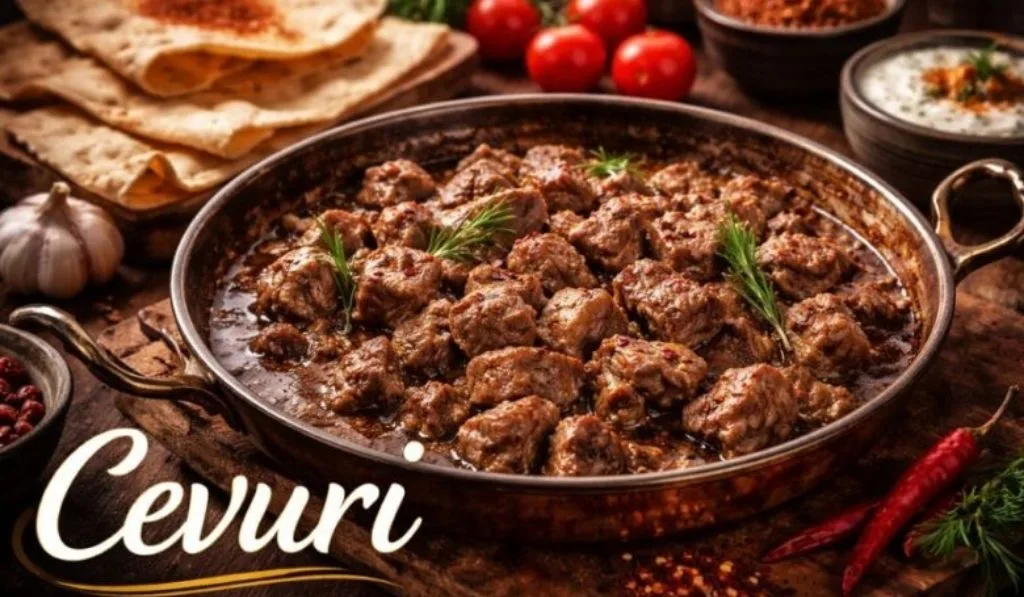
You have typed “cevurı” in the search field, and you’re probably wondering: What does “cevurı” mean? Is it a food, a word, or something else completely? The answer is largely about food, and a very interesting one at that. Cevurı is a slow-cooked Turkish meat dish that originated from the pastoral culture of Anatolia, and this guide explains what it is, how it was invented, how it tastes, and why it’s becoming popular in the United States in 2026.
Some Interesting Data on Cevurı
| Detail | Information |
| Type | A traditional meat dish from Turkey |
| Origin | Anatolia (central and eastern Turkey) |
| Primary protein | Lamb, goat, or beef |
| Core technique | Rubbing down into animal fat and slow roasting or turning in animal fat |
| Name origin | To turn, to rotate, Turkish verb “cevirmek” |
| Related dishes | Kebab, kavurma, shawarma (Döner kebab) |
| Serving tradition | Gatherings of families, village festivities, special events |
| Dietary note | A high protein, no grain supplement is not required |
Where the Name Originally Originates
The verb cevurı is derived from the Turkish word cevirmek, meaning “to turn” or “to rotate.” This is not a poetic expression. It literally refers to how you cook the meat, you turn it around and around slowly, so each side cooks for the same length of time.
This is the turn that it’s all about. It makes the fat render evenly, helps to get a caramelized crust on the outside, and keeps the inside from drying out. The name is the method. Unlike most western dishes, which are usually named after a person, a place, or an ingredient, this dish is named after the godfather of the entire holiday tradition.
The word is related to the more commonly known word döner, also derived from dönmek (to rotate). Cevurı and döner are similar in the way they are made because of their cooking principles, both involve slow rotation over a heat. It’s just about how the dish is cut, what kind of fat is used, and also the setting of the dish’s appearance.
The Anatolian Roots of Cevurı
Cevurı is the most ancient of the nomadic and semi-nomadic groups of the Anatolian plateau, which covers a large part of central and eastern Turkey. This gave rise to these groups raising livestock as the core of their economy and survival, and their ability to cook meat using little equipment.
All that was needed was a clay pot or an iron pan, a bit of animal fat, a few spices, and a fire. The meal that came from the conditions was meant for nourishment not novelty. It was high in protein, low in fat, easy to make in bulk, and designed to support families during the winter months and during long, hard winters.
Over the centuries, as these communities settled throughout Anatolia, the dishes were influenced by the area.
In the west, near Izmir and Bursa, they would add olive oil and the fresh herbs, oregano and thyme, to their dishes. The use of cumin, paprika, and dried red pepper flakes was favored in the central highlands, around Konya and Kayseri. Pomegranate molasses or roasted red pepper paste occasionally was added in the southeast, near Gaziantep.
Every region had its own version of cevurı, each one was identifiable, and each contained the ingredients available from the local land and trade routes.
How Cevurı Is Made
Making cevurı is not difficult but it does take time. The hasty process will result in hard, dry meat. If done with care it will come apart with a fork, and the kitchen will smell like a Turkish grandmother’s kitchen on a Sunday afternoon.
Typical Ingredients
Meat: Traditional is a bone-in lamb shoulder or leg. Goat is suitable for regional versions. In the United States, good fat marbling, particularly in chuck, is an easy substitute.
Fat: The usual type is sheep tail fat (kuyruk yagi). Slowly cooked and adds richness to the dish. In the USA, lamb tallow or good quality beef tallow may be used instead.
Aromatics: Onion, garlic, and possibly a bit of tomato paste.
Herbs: Dried red pepper, black pepper, and dried mint (occasionally).
The Cooking Process
The meat is cut into large chunks or left on the bone. It is added to a large pot or wide pan containing the fat and cooked without any water until moderately hot. The idea is to allow the meat to give up its own juices, cook them off, and then cook the meat in the rendered fat.
The “turning” is a real thing, you continue to rotate the meat so that no part is in a static position. The actual time for preparing the food is 90 minutes to 2½ hours depending on the cut and type of heat source.
Salt is added late, not first! This is important because it leaches out the moisture and thus decreases the tenderness that you have slowly created throughout that cooking time.
Comparisons to Dishes That Americans Know
You might have unwittingly had close relatives of cevurı at a Turkish or Mediterranean restaurant in the US.
| Dish | Technique | Fat base | Serving style |
| Cevurı | Pan-turned, slow-cooked | Rendered animal fat | Family-style, rustic |
| Döner kebab | Vertical rotisserie | Lamb or chicken fat | Shaved into wraps |
| Kavurma | Similar pan method | Kuyruk yagi | Often preserved/canned |
| Shawarma | Vertical rotisserie | Various | Wrapped, sauced |
Cevurı is most similar to kavurma in technique. The main difference is that kavurma is sometimes prepared to be preserved, and the meat is heavily salted so it will last for many weeks. Cevurı is a new preparation that is eaten on the day it is made, and is typically consumed at the table where the cevurı is prepared.
Cevurı in the United States
Turkish cuisine has definitely been in the ascendant in American cities as a result of a proliferation of restaurants owned by Turkish people, and a general love by Americans for Mediterranean and Middle Eastern food. Today, there are Turkish restaurant enclaves in big cities around the world, such as New York, Los Angeles, Chicago, and Houston, where slow-cooked meat is a regular menu item.
Cevurı is not commonly mentioned by name in American restaurants. It is more commonly seen under the heading “slow-roasted lamb” or “Anatolian meat dishes.” However, home cooks are learning it as of late from their participation in food communities on YouTube and cooking shows on Turkish accounts, where the art of cooking is demonstrated in detail and the name is properly pronounced.
The closest American cut to traditional cevurı is called lamb shoulder and is sold at halal butcher shops and specialty grocery stores all over the country. A version that is pretty close to the original without any imported ingredients is possible.
Read more: Total Rail Solutions: The Full Story of the UK’s Former Road-Rail Plant Specialist
Nutritional Aspect of Cevurı
Cevurı is rich in protein and animal fats but virtually free of carbohydrates, being a dish based on slow-cooked meat and rendered animal fat. Traditional lamb cevurı will give:
Protein: About 5 grams per 150-gram serving
Fat: Mostly saturated and monounsaturated fats
Copper: Present in both lamb and beef, although in small quantities
B vitamins: Particularly B12 and B6, which are important for energy metabolism
It is usually eaten with a side of flatbread, bulgur pilaf, or a simple salad of chopped tomatoes and parsley. The meat is balanced with the bread and the grain and makes for a complete meal.
Final Thoughts
What is significant about cevurı is that it is not a concept of a trendy food or a newly created recipe. It’s an easy, sincere method that has been employed for a long time in Anatolia and it is efficient. The slow turning, the rendered fat, the patience, they all produce a quality of meat that is not matched by any of the faster processes.
Don’t miss the chance to savor it on a Turkish home plate meal or a fine restaurant in Anatolia. And then if you want to try to make it yourself, you will need a lamb shoulder, a heavy cast-iron pan, and about two hours on a Saturday afternoon. Such food traditions continue to live on because they deserve to be served at the dinner table, as Ottoman times cooking practices have done to the present day to millions of people of Turkey and its diaspora.
Persistent Questions and Answers on Cevurı
What is cevurı?
Cevurı is a traditional Turkish slow-cooked meat dish, which is prepared by turning meat, usually lamb, goat, or beef, over rendered animal fat over and over again to cook it evenly. The word is derived from the Turkish verb, cevirmek, which translates to turn or rotate. It is a staple food and a special food item at family meals and special events, especially in rural Anatolian communities.
What’s the difference between cevurı and döner kebab?
The concept of turning meat while cooking is the same for both dishes, although the techniques are different. Döner kebab is cooked on a vertical rotisserie and then cut into wraps or plates. Cevurı is cooked in a pan or pot at home or community kitchen in large chunks without bread wrapping and served family style. Also, the base is fat, and the amount of food is smaller.
May use beef instead of lamb for cevuri?
Yes. Other cuts that can be used include beef chuck or short rib, which have enough fat marbling to keep them moist for the extended cooking period. This will taste a bit different than the classic lamb cevurı, but with a similar outcome. Use lamb tallow or beef tallow if it can be obtained as your cooking fat.
How is cevurı flavoured?
The taste is savory, rich, with a bit of smoke, and with a nice cuminy, black peppery background. The meat is tender enough to be pulled apart. The exterior is a light caramel color due to the slow rendering time. It’s flavorful but not spicy like what others would expect with Middle Eastern cuisine.
Can you find cevurı in Turkish restaurants in the USA?
Not always by name. The dish is available in a variety of forms, such as slow roasted lamb or Anatolian meat, in some Anatolian and Turkish restaurants in larger American cities. The best bet is a restaurant that offers only regional Turkish food but not Mediterranean food, or a Turkish home cook who developed the cuisine while growing up.
In what country can I buy cevurı ingredients in the US?
The primary ingredient you will need is lamb shoulder and you can purchase this from a halal butcher shop in most cities or at some Whole Foods stores or specialty markets. Sheep tail fat is harder to get but it can be purchased in Middle Eastern and Central Asian grocery stores. Common spices such as cumin, paprika, and black pepper are found in any store.