








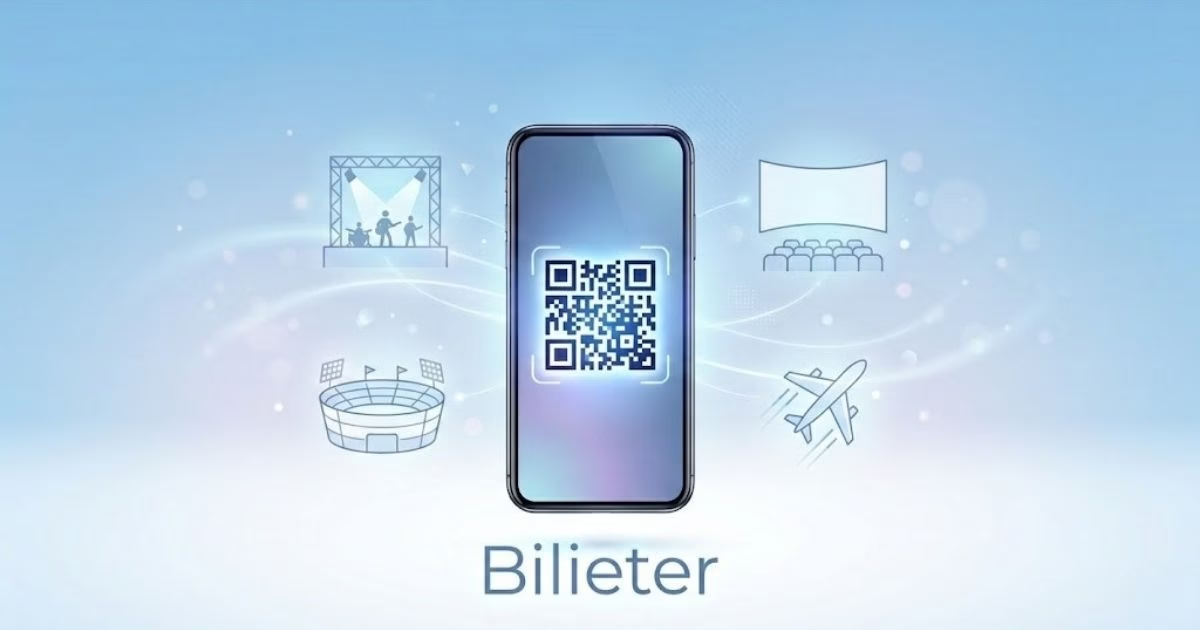
Standing in a long queue outside a venue, struggling to find a printed ticket, or discovering a booking error at the entrance , these are frustrations that millions of people have experienced. The rise of digital access solutions has changed this picture significantly.
It is one of the most discussed concepts in this space, combining the traditional idea of ticket management with the speed and security of modern digital systems.
Whether it refers to a person handling access at an event or a fully automated platform managing the entire ticket lifecycle, bilieter represents an important shift in how organisations and individuals manage entry, bookings, and attendance.
This guide explains the full meaning of bilieter, how it works, where it is used, who benefits from it, and what the future holds for this evolving concept.
What Is Bilieter?
Bilieter is a term used to describe both a role and a system involved in ticket management and access control. On one level, it refers to a person responsible for issuing, verifying, or managing tickets at events, transport hubs, or entertainment venues.
On another level, it describes a modern digital framework that automates the entire ticket process, from creation and purchase to delivery, validation, and entry.
The word itself is not found in standard dictionaries. However, it is increasingly used across online discussions about digital ticketing, event management, and access control systems. It sits at the intersection of customer service, technology, and operations. Understanding bilieter means understanding both its human dimension and its digital application.
The dual meaning of bilieter is what makes it particularly relevant today. As ticketing systems evolve, the boundary between the human role and the technology supporting it has become fluid. A bilieter is no longer simply a person with a handheld scanner. The concept now encompasses the entire infrastructure that controls how people access events and services.
The Origin and Background of the Term
The word bilieter appears to be derived from or closely related to the French and Dutch words for a ticket issuer or ticket agent. In several European languages, variations of “billet” refer to a ticket, and the suffix suggests a person or system associated with that function. This linguistic root connects the term to a long history of organised ticketing in transport and entertainment.
The concept of a dedicated ticket handler dates back to the early days of commercial rail travel in the 19th century. Ticket offices, conductors, and gate agents all performed what could be described as bilieter functions long before the word entered digital-era vocabulary. The history of ticketing is directly tied to the growth of mass public events and transportation systems.
As digital platforms began to replace paper-based systems in the late 1990s and early 2000s, the meaning of bilieter expanded. Today it captures both the legacy of human ticket management and the modern reality of automated, cloud-based access systems.
The term has gained traction particularly in technology and event management communities that need a single word to describe this combined function.
Bilieter: Full Concept Overview at a Glance
| Aspect | Details |
| Primary Meaning | Person or system managing ticket issuance, verification, and access control |
| Secondary Meaning | Digital platform automating the full ticket lifecycle |
| Word Origin | Related to “billet” (ticket) in French and Dutch |
| Core Function | Ticket creation, distribution, validation, and entry management |
| Key Industries | Events, transport, entertainment, sports, conferences, tourism |
| Technology Used | QR codes, cloud computing, encryption, AI, mobile apps |
| User Types | Event organizers, attendees, transport operators, venue managers |
| Entry Model | Digital tickets via email, app, or mobile wallet |
| Main Benefits | Speed, security, convenience, cost reduction, real-time data |
| Main Challenges | Internet dependency, digital literacy gaps, system failure risks |
| Human Role | Still needed for support, exceptions, and complex situations |
| Environmental Impact | Reduces paper waste from printed tickets |
| Future Direction | Biometric verification, AI-driven personalisation, blockchain integration |
How a Bilieter System Works: Step by Step
Understanding how a bilieter system functions in practice helps clarify why it has become so important across multiple industries. The process follows a clear sequence from event setup to final entry.
Step 1: Ticket Creation
An event organiser or service provider creates tickets within a digital platform. Each ticket contains specific information such as event name, date, time, seat number or zone, and a unique identifier. The system generates individual records for each ticket sold.
Step 2: Distribution and Purchase
Customers purchase tickets through a website, mobile application, or third-party platform. Payment is processed using secure digital methods. Upon successful payment, the ticket is delivered instantly via email, SMS, or directly into a mobile wallet or dedicated app.
Step 3: Digital Storage
Instead of carrying a printed ticket, the user stores their digital ticket on a smartphone. The ticket typically takes the form of a QR code or barcode. Some platforms also allow ticket transfer to another person, which is useful when plans change.
Step 4: Validation at Entry
On the day of the event, bilieter staff or automated gates scan the QR code using a handheld device or fixed scanner. The system validates the ticket instantly by checking it against the central database. It confirms that the ticket is genuine, has not already been scanned, and is being used at the correct time and venue.
Step 5: Entry and Data Recording
Once validated, entry is granted. The system records the scan in real time. Organizers can monitor attendance figures, track peak entry times, and manage capacity from a central dashboard throughout the event.
Step 6: Post-Event Analytics
After the event, organizers access data on total attendance, entry patterns, ticket transfer rates, and any irregularities. This information informs planning for future events and helps improve customer experience over time.
The Human Side of Bilieter: The Role of a Ticket Manager
Despite the growth of automation, the human dimension of bilieter remains important. Many events and venues continue to rely on trained staff who perform bilieter functions at entry points, customer service desks, and booking offices.
A human bilieter typically handles the following responsibilities.
Issuing and selling tickets to customers in person or over the phone, particularly in settings where online booking is not available or preferred.
Scanning and verifying digital or physical tickets at entrances, confirming that each visitor holds a valid, authentic ticket for the correct event or journey.
Assisting customers who encounter problems such as booking errors, duplicate entries, system failures, or misplaced confirmation codes.
Managing crowd flow at entry points, particularly during high-demand events where speed and safety must be balanced.
Handling refunds and amendments when customers request changes to their bookings before or during an event.
Communicating with the operations team to flag issues in real time, such as counterfeit tickets, technical failures, or access disputes.
The human bilieter adds something that technology cannot fully replicate: personal interaction and judgement in complex or unexpected situations.
When a guest is confused, distressed, or holding an incorrect ticket, a calm and knowledgeable staff member can resolve the issue quickly and keep the entry experience positive.
Where Bilieter Functions Appear in Daily Life
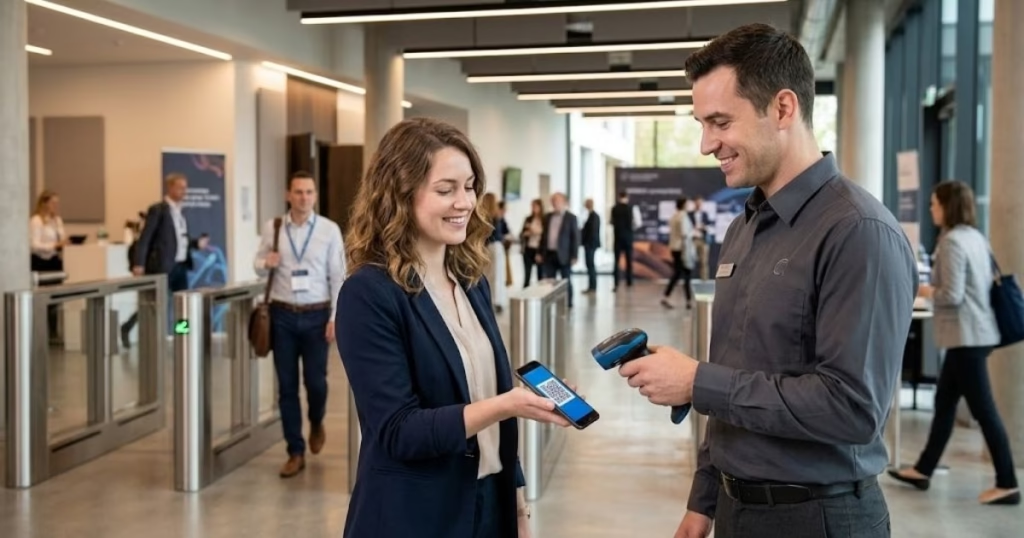
The bilieter concept is present across a wide range of environments. Many people interact with bilieter systems daily without necessarily recognising the term.
| Industry | Bilieter Application | Example |
| Live Events | Ticket sales, scanning, crowd management | Concerts, festivals, theatre shows |
| Sports | Stadium entry, seat verification, season passes | Football matches, cricket, tennis |
| Transportation | Boarding passes, rail tickets, bus passes | Trains, buses, airlines, ferries |
| Cinema | Mobile ticket scanning, seat allocation | Multiplex cinemas, independent screens |
| Conferences | Registration management, badge scanning | Business summits, academic events |
| Exhibitions | Entry control, timed-slot booking | Museums, art galleries, trade fairs |
| Tourism | Attraction entry, guided tour booking | Theme parks, heritage sites, zoos |
| Corporate Access | Building entry, meeting room booking | Office complexes, co-working spaces |
| Online Events | Virtual access codes, webinar registration | Live streams, digital conferences |
In each of these settings, bilieter functions connect the customer’s payment and booking to their physical or digital access. The system ensures that only valid ticket holders gain entry while providing organizers with accurate, real-time information about who is attending.
Key Features of a Modern Bilieter Platform
A well-designed bilieter system goes far beyond simple ticket scanning. Modern platforms typically include a comprehensive set of features designed to serve both organizers and attendees.
Online Ticket Sales and Booking
Customers can purchase tickets through a website or mobile application at any time, from any location. The checkout process is streamlined to minimize steps and reduce abandonment.
Instant Digital Delivery
Upon purchase, tickets are delivered immediately via email, SMS, or app notification. This eliminates waiting times and removes the need for physical ticket collection.
QR Code and Barcode Validation
Each ticket carries a unique, encrypted QR code or barcode. Scanning this at entry confirms validity in real time and prevents the same ticket from being used more than once.
Mobile Wallet Integration
Tickets can be saved directly to Apple Wallet, Google Wallet, or similar mobile storage systems, making them easy to access even without an internet connection at the venue.
Fraud Prevention and Security
Modern bilieter systems use dynamic validation, encryption, and unique ticket identifiers to detect and block counterfeit or duplicate tickets. Some advanced systems incorporate AI to identify suspicious patterns in ticket usage.
Real-Time Attendance Tracking
Organizers can monitor live entry numbers, identify bottlenecks at entry points, and make operational adjustments as the event unfolds.
Customer Notifications
Automated alerts remind attendees about upcoming events, schedule changes, or entry instructions. This reduces no-shows and improves the overall attendee experience.
Ticket Transfer and Resale Management
Users can transfer tickets to other people directly through the platform, with the system updating records to reflect the new holder. Controlled resale features can also prevent unauthorized secondary market activity.
Analytics and Reporting
Post-event reports provide detailed insights into attendance patterns, sales performance, demographic data, and entry efficiency. This information helps organizers plan future events more effectively.
Integration with Other Systems
Advanced bilieter platforms connect with CRM software, payment gateways, marketing tools, and venue management systems to create a unified operational environment.
Benefits of Bilieter for Attendees
From the customer’s perspective, bilieter systems offer clear and tangible advantages compared to traditional ticketing methods.
Convenience. Tickets can be purchased from home, stored on a smartphone, and presented without any physical documents. The entire process, from booking to entry, can be completed using a single device.
Speed. Digital scanning at entry points is significantly faster than manual ticket checking. This reduces queue times and improves the experience for everyone entering a venue.
Security. Digital tickets are harder to lose, damage, or counterfeit than paper tickets. Unique identifiers and encrypted codes provide a level of protection that printed tickets cannot match.
Flexibility. Many bilieter systems allow ticket transfers, upgrades, or refunds to be handled online without needing to contact a box office or customer service team in person.
Instant confirmation. After purchasing, customers receive immediate confirmation of their booking. There is no uncertainty about whether a transaction has gone through.
Reduced environmental impact. Digital tickets eliminate the need for printing, packaging, and physical distribution, reducing the carbon footprint associated with large-scale events.
Read also: Pabington Explained: The Real Meaning, Origin, and Rise of This Viral Digital Term
Benefits of Bilieter for Organizers
Event organizers and service providers gain equally significant advantages from adopting bilieter systems.
Lower operational costs. Removing paper ticket printing, physical distribution, and manual counting reduces expenses substantially, particularly for large or recurring events.
Reduced fraud. Automated validation with unique ticket identifiers makes it far harder for counterfeit tickets to gain entry. This protects revenue and maintains venue integrity.
Better data. Real-time and post-event analytics provide organizers with detailed information about their audience, helping to inform future marketing, capacity planning, and programming decisions.
Scalability. A digital bilieter platform can handle thousands of simultaneous transactions and entry scans without the bottlenecks that affect manual systems.
Improved customer experience. Faster entry, cleaner communication, and fewer booking errors all contribute to a better experience for attendees, which strengthens brand reputation and encourages repeat attendance.
Staff efficiency. When routine validation tasks are automated, staff can focus on customer service, problem-solving, and safety rather than manual ticket checking.
Bilieter vs. Traditional Ticketing: A Direct Comparison
| Feature | Traditional Ticketing | Bilieter / Digital System |
| Ticket Format | Printed paper or card | Digital QR code or barcode |
| Purchase Method | Box office, phone, in person | Online, app, any device |
| Delivery Time | Days or hours (postal/collection) | Instant (email, SMS, app) |
| Entry Speed | Slow (manual checking) | Fast (automated scanning) |
| Fraud Risk | High (easy to counterfeit) | Low (encrypted, unique IDs) |
| Ticket Loss Risk | High (physical item) | Low (stored digitally) |
| Transfer Options | Limited or in-person only | Online transfer, instant update |
| Environmental Impact | High (paper, printing, transport) | Low (entirely digital) |
| Data for Organizers | Minimal, delayed | Real-time, detailed analytics |
| Staffing Requirement | High (manual verification) | Lower (automation handles routine tasks) |
| Scalability | Limited | Highly scalable |
| Accessibility | Restricted to physical locations | Global, 24/7 availability |
Security in Bilieter Systems
Security is one of the most critical considerations in any ticketing system. Bilieter platforms address this through multiple layers of protection.
Unique QR codes. Every ticket carries a code that is generated specifically for that transaction. Once scanned, the code is marked as used and cannot be accepted again. This prevents the same digital ticket from being shared or reused.
Encryption. Payment data and personal information are protected using industry-standard encryption protocols. Customers can complete transactions with confidence that their financial data is secure.
Dynamic validation. Some advanced systems generate codes that change over time, making screenshots or static images useless for fraudulent entry attempts.
Real-time duplicate detection. If a ticket is presented more than once, the system flags the duplicate immediately. Entry staff are alerted and can investigate without disrupting the flow of legitimate attendees.
Account-linked tickets. When tickets are tied to a registered user account, it becomes far more difficult for unauthorized parties to use them. Identity verification can be added as an additional layer for high-security events.
Challenges and Limitations of Bilieter Systems
No system is without limitations, and a balanced understanding of bilieter requires acknowledging the challenges it presents alongside its benefits.
Internet and device dependency. Digital ticketing relies on working smartphones, stable internet connections, and functioning platforms. In areas with poor connectivity or among users with limited digital access, these dependencies create real barriers.
Digital literacy gaps. Not all users are equally comfortable with smartphone apps, QR codes, or online booking processes. Older attendees or those unfamiliar with digital tools may find the experience confusing or stressful without adequate support.
System failure risk. If the validation platform experiences an outage during an event, the consequences can be severe. Backup procedures, offline ticket storage, and manual check-in processes must be in place to manage these situations.
Data privacy concerns. Collecting detailed attendance and behavioural data raises questions about how that information is stored, used, and shared. Organizers and platform providers must comply with data protection regulations and communicate clearly with users about their data.
Exclusion risk. A fully digital system can inadvertently exclude people who do not own smartphones or cannot access mobile ticketing for other reasons. Responsible implementations retain a physical or printed backup option for those who need it.
Industries Leading the Adoption of Bilieter Technology
Several industries have been at the forefront of adopting bilieter-style digital systems, and their experiences offer useful insights into both the opportunities and the operational realities.
Music and live entertainment have been among the fastest adopters. Major concert venues and festival operators now use sophisticated digital ticketing platforms that handle millions of transactions annually. Dynamic pricing, fan verification systems, and anti-touting measures are increasingly common features.
Sports stadiums and arenas have moved extensively to digital access. Season ticket holders manage their passes through apps, and matchday entry is typically handled entirely through mobile scanning. Data collected at entry informs stadium operations, retail positioning, and fan engagement strategies.
Airlines and rail operators have used digital boarding passes and mobile tickets for years, and their experience demonstrates how bilieter principles scale effectively in high-volume, time-sensitive environments.
Cinemas offer one of the clearest examples of seamless bilieter implementation. The ability to browse films, select seats, pay, and receive a digital ticket within a single mobile session has become standard across major chains.
Conferences and corporate events use bilieter systems to manage complex registration processes involving multiple ticket types, session bookings, access levels, and attendee communication.
Skills Required to Work as a Bilieter
For those working in the human dimension of this role, a specific combination of skills makes the difference between adequate and excellent performance.
| Skill Area | Why It Matters |
| Customer communication | Visitors often need guidance or reassurance at entry points |
| Technical proficiency | Operating scanners, apps, and backup systems efficiently |
| Problem-solving | Resolving booking errors or system issues under pressure |
| Attention to detail | Identifying invalid, expired, or counterfeit tickets accurately |
| Calm under pressure | Managing large crowds and tight schedules without errors |
| Data handling | Recording entry information accurately and confidentially |
| Adaptability | Adjusting to new platforms and system updates quickly |
| Teamwork | Coordinating with operations, security, and customer service |
These skills are applicable across the full range of environments where bilieter roles exist, from large stadium events to small independent theatre productions.
The Future of Bilieter: What Is Coming Next
The evolution of bilieter systems is closely linked to broader trends in technology and consumer behaviour. Several developments are likely to shape the next phase of this space.
Biometric verification is already in use at some major venues and airports, allowing entry through facial recognition or fingerprint scanning. As this technology becomes more affordable and widely accepted, bilieter systems may integrate biometric validation as a standard option.
Blockchain-based ticketing offers a way to create fully transparent, tamper-proof ticket records. Each transaction is logged on a distributed ledger, making fraud virtually impossible and enabling trustworthy secondary market activity.
Artificial intelligence is being applied to detect suspicious ticket patterns, optimize pricing in real time, and personalise the booking experience for individual users based on their history and preferences.
Contactless and wearable access is expanding beyond smartphones. Wristbands, smart cards, and other wearable devices are already used at some events and will likely become more common as bilieter platforms seek to reduce friction further.
Sustainability reporting will become a more prominent feature, as event organisers face increasing pressure to demonstrate the environmental benefits of digital over physical ticketing.
Integration with digital identity systems may eventually allow bilieter platforms to verify not just ticket validity but the identity of the ticket holder, reducing fraud and enabling more personalised event experiences.
Tips for Getting the Best Experience from a Bilieter System
Whether attending an event or managing one, a few practical steps help ensure a smooth bilieter experience.
For attendees: Save your digital ticket to your mobile wallet rather than relying on email, as wallet tickets remain accessible without an internet connection. Screenshot your QR code as a backup. Arrive with sufficient time to complete scanning, particularly at large events. Charge your phone before attending.
For event organizers: Test your scanning equipment thoroughly before event day. Train all entry staff on both the digital system and the manual backup process. Ensure your platform includes offline ticket storage as a fallback. Communicate entry instructions clearly to attendees in advance.
For venues: Invest in robust Wi-Fi infrastructure at entry points to support real-time validation. Position adequate numbers of scanning stations relative to expected attendance. Review post-event data to identify entry bottlenecks and improve future operations.
Conclusion
Bilieter captures something important about how access management is changing in the modern world. It holds both a traditional meaning, rooted in the human role of ticket handling that has existed for over a century, and a contemporary one, defined by digital platforms, cloud validation, and real-time data.
Neither dimension has made the other redundant. Technology handles scale, speed, and security with remarkable efficiency. People handle the unexpected, the human, and the nuanced. The strongest bilieter implementations bring both together, using digital systems to remove friction and human staff to provide the support and judgement that technology alone cannot deliver.
As events, transport, entertainment, and public services continue to move toward fully digital access models, understanding bilieter gives a clearer picture of where these systems are heading and what good access management actually looks like in practice.
Frequently Asked Questions
What does bilieter mean?
Bilieter refers to both a person who manages ticket issuance and access control and a digital system that automates the full ticket lifecycle, from purchase and delivery to validation and entry.
Is bilieter a real word?
Bilieter is not found in standard dictionaries but is widely used in digital and event management contexts to describe ticket management roles and platforms. Its roots are linked to the French and Dutch word “billet,” meaning ticket.
How does a bilieter system work?
A bilieter system allows tickets to be created, sold, delivered digitally, and validated at entry using QR codes or barcodes. The entire process is managed through a cloud-based platform accessible to both organizers and attendees.
Can technology fully replace a human bilieter?
Technology automates routine validation tasks efficiently, but human bilieter staff remain necessary for customer support, resolving booking errors, managing unexpected situations, and ensuring a welcoming entry experience.
Read also: Delta Flight DL275 Diverted LAX: What Really Happened on May 28, 2025