



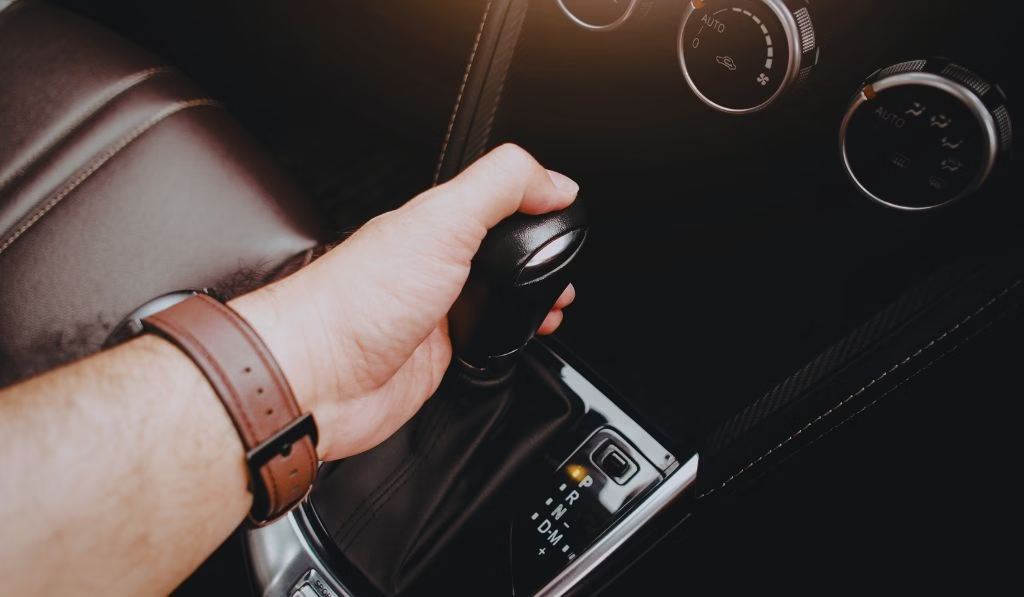
The pivotal point of first acceleration into sustained driving during manual transmission vehicles is the switching 2nd gear. This basic art defines the smoothness of the ride, fuel consumption and the lifespan of the transmission.
What Does Switching 2nd Mean?
Switching 2nd is a term used in reference to shifting the first gear to the 2nd gear in a car with a manual transmission.
This is at the point of initial acceleration when the car has gotten sufficient momentum to carry the higher speeds without overstraining the engine. First gear provides the highest torque and least speed potential whereas 2nd gear provides the same with greater velocity.
The process entails the coordination of three factors, which include disengaging the clutch, gliding the gear lever, and turning off the throttle. This basic maneuver, when performed adequately, produces flowing acceleration patterns that increase the driving experience and maintenance of the vehicle.
The Mechanics of Switching 2nd Gear
The technical process can make drivers perfect this vital transition. The clutch momentarily relieves the engine output to the transmission, and permits a smooth change of gears without mechanical load.
How the Clutch System Works
The components of the clutch assembly are a number of rather important parts that collaborate. This is because the plate of the pressure acts on the clutch disc pressing it against the flywheel to provide friction which is used to transfer engine power to the transmission.
When you press the clutch pedal you push the release bearing against the pressure plate and the connection is disengaged.
This disconnection produces a short term power disconnection which enables gears to be meshed without any grinding. The rotational speeds of the various gears are aligned with the rotational speeds of the synchromesh rings within the transmission, which adds to the transition.
Shifting Process Step-by-Step
- Start acceleration in 1st gear up to the optimum RPM range.
- Push the accelerator down, and at the same time push the clutch pedal to the floor.
- Shaft a gear lever in one movement through a neutral to a second position.
- Biting point: Release the clutch gradually with a slight throttle pressure.
- Part the engagement by accelerating fully in 2nd gear with full release of the clutch.
This coordination takes practice to attain smooth transitions free of jerks. The movements must be carried on in a natural transition without any hesitation.
Switching 2nd Gear Rules: RPM and Speed Guidelines
The quality of your gear change is dependent on timing. Knowledge of optimal shift points can also ensure minimization of engine damage and maximization of performance and economy.
Best RPM of the various driving styles
To drive economically, change between 2,500-3,000 RPM. The range provides a good balance between power delivery and fuel efficiency. The engine is at its efficiency range with a lower consumption at a comfortable acceleration range.
Driving Performance driving may involve keeping the first gear until 3,000-3,500 RPM to achieve the maximum acceleration. This increased shift point taps more power out of the engine prior to moving to the 2nd gear.
Skid-less conservative changes of 2000-2500 rpm are suitable to light traffic with gentle and fuel-conscious driving.
Guidelines on the speed to move smoothly
Normal switching 2nd gear ranges depend on the vehicle type as well as conditions on the road:
- Economy shifting: 10-15 mph
- Normal driving: 15-20 mph
- Performance driving: 20-25 mph
- Diesel engines: 12-18 mph
Check the sound patterns of your engine. A loud, pained sound is the indicator of the necessity of a sudden shifting. On the other hand, when the engine decelerates or slows down upon the shift, then you have shifted too soon.
Some of the most frequent errors in switching 2nd and How to overcome them
The knowledge of errors is used to mitigate transmission damage and enhances technique to a great extent.
Too early or Lugging the Engine
Any attempt to shift below 2,000 RPM results in the engine lugging, which puts a strain on components, which wear out in the long run.
The vehicle stalls or even halts when it is shifted too early. This causes the engine to operate at lower speeds than it is meant to, which speeds up wear on internal parts.
Solution: Wait until the tachometer gets to a minimum of 2,000 RPM then listen against the natural rhythm of the engine before shifting.
Making Clutch Too Early
Quick release of the clutch results in roughness in the motion and unpleasant rides. The method will lead to a lot of wear of the clutch plate and transmission internals. The passengers experience unexpected shocks and the drivetrain has to endure unwarranted shocks.
Solution: Engaging gradually over 1-2 seconds, locate the bite point where engagement starts before disengaging.
Incomplete Depression of the Clutch
Avoiding full depression of the clutch pedal will result in grinding noises–metal on metal contact, which will wear out the synchromesh parts. This occurs when gears are trying to engage and at the same time they are half engaged with the engine.
Solution: It is advisable to press the pedal of the clutch to the floor before trying to change any gear. This should be a no-compromise rule.
Looking at the Gear Lever
Drivers are expected to be road aware during the shift. Distracting eyes off the road results in risky circumstances and this is more so in traffic.
Solution: The muscle memory that develops out of practice will remove the necessity to look down. Train in parking lots that no one is in until the pattern of the gear becomes automatic.
Riding the Clutch
When you are driving with your foot on the clutch pedal, this is very prone to prematurely wearing the release bearing. This pressure is continuously existing and induces heat and speeds up component failure.
Solution: When you are done with shifts place your left foot on the floor or footrest, but not on the clutch pedal.
Professional Secrets of Perfect Transitions
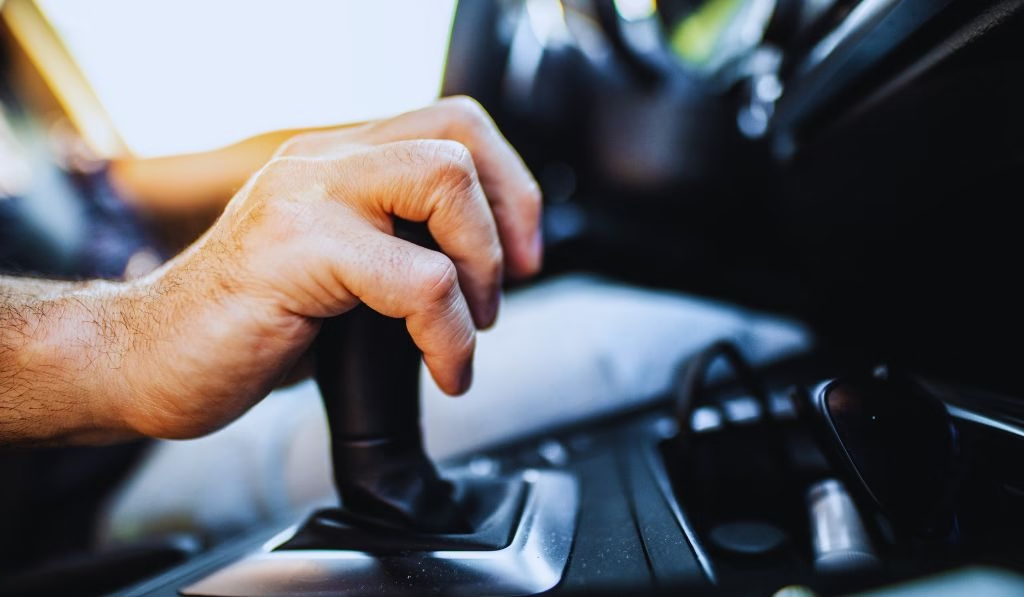
Learn to do these tricks and have professional gear changing that will not only impress the passengers, but also save your investment.
Movements: Coordinating Your Movements
It is all about acting concurrently. Take off the accelerator and press the clutch at the same time these movements must be on a natural flow. Separation causes power disparities and trip discontinuities that leave passengers uncomfortable.
Just imagine it is a single movement: right foot up, left foot down, hand moves, left foot up, right foot down. This brings about a smooth shift of power.
Locate and Learn to Clutch the Bite Point
Each vehicle possesses a certain point of engagement at which power is transferred. Master this place by practice. Gradually release the clutch until you sense a little resistance in which case you should apply a small throttle.
The bite point usually comes half way up the clutch pedal travel, but this depends on the vehicle. When the engine starts to work (and this is usually accompanied by a slight decrease in RPM), maintain that position a little before you finish releasing it.
Engine speed to be equal to Transmission speed
High-technology drivers employ rev-matching methods. Upon disengagement of the clutch, you need to have an engine speed that is very similar to the speed that the engine would need in 2nd gear at your present speed. This does not give a jolt or jerk when passing power.
Although all beginners only work on the principle of simple coordination, intermediate drivers are expected to train all these speeds instinctively.
Practice Smooth throttle Application
Do not experience sudden acceleration when going into 2nd gear. Slow pressure keeps the momentum and avoids the spinning of wheels and over revving of the engine. Accelerate gradually as the clutch becomes fully engaged.
Consider gradual and steady when you are driving daily but think quick and aggressive when driving the car aggressively.
Use the Palming Technique
Good hand placement on the gear lever can ensure proper and efficient shifts. In the first and 2nd gear, you should face your palm a bit off your body. This is a natural stand that allows improved control and avoids lost shifts.
However, the gear lever must not be grasped tight, but with a loose, guiding motion, which permits the natural gates of the transmission to guide the motion.
Advantages of Proper Switching 2nd Technique
Learning this will provide various benefits other than enjoying the academic driving experiences.
Extended Transmission Life
Correct technique keeps the costly parts such as the clutch, synchromesh rings and gear teeth in good condition. Smooth shifts reduce mechanical stress, which can put years of service on your transmission. When properly done, a well-maintained clutch should last 60,000-100,000 miles.
Improved Fuel Economy
Optimal RPM ranges prevent the engines working outside their efficiency ranges. By forcing the engine to over-rev, we burn more fuel as it has to burn more combustion and lugging the engine burns more fuel as it struggles to keep up.
Good habits: Switching 2nd gear Proper habits can increase fuel economy by 5-10%.
Increased Confidence in Driving
The ability to transition between gears successfully develops driving competence in general. This basic ability forms a basis of such advanced skills as heel-toe rotation and rev-matching. Bold shifters also find it easier to drive and become less tense in traffic.
Passenger Comfort
The gears shift smoothly forming enjoyable rides. Professional drivers switch the gears almost without being noticed by the passengers and this is a clear show of mastery in the use of manual transmission.
Better Vehicle Control
The correct choice of gears keeps the maximum engine power. Being in the right gear when you have to overtake a vehicle or pull over to a different lane makes the reaction speedy without wasting any time.
Modification of Switching 2nd Technique to Various Driving Conditions
You should change your style depending on certain circumstances on the road.
City Traffic Patterns
Constant changing between first and 2nd gear is needed because of frequent stops. Keep RPM low (2,000-2,500) to be efficient and have lowered emissions. Prepare your left foot and pay attention to smooth clutching so as to reduce wear.
Foresee traffic flow to eliminate unnecessary shifts. When you are sure you will have to pause, postpone the upshifting between the first and the 2nd gear.
Hill Climbing Strategies
Up hill driving requires higher power of the engine. Delay first gear longer to 2nd, up to 3,000-3,500 RPM. This helps avoid loss of momentum when climbing inclines and minimizes the load on the clutch.
Even on steep grades you might have to wait still longer to keep up the power. The engine must be powerful and assured and not labored.
Highway Merging
In joining highways, aggressive acceleration involves longer retention of lower gears. Accelerate to higher RPM and then change gears and make sure you have enough power to accelerate in order to keep up with traffic in a safe and effective manner.
Performance Driving Techniques
Aggressive shifts are needed to track or spirited driving. Warm up first gear to peak power (approximately 5,000 RPM on most engines) and shift. Do faster clutch actions and still be smooth in order to achieve maximum acceleration.
Wet or Slippery Conditions
When it rains, snows or ice, softer clutch engagement helps hold the wheel to spin through the 1st to the 2nd shift. Power delivery in the form of smoothness will result in traction and control in compromised surfaces.
Types of Vehicles and Special attention
Various cars need the modified strategies on the switching of 2nd gear depending on the features of the vehicle.
Standard Passenger Cars
These vehicles have light clutch pedals and reduced RPM requirements. Peak at 2,500 RPM to achieve the best results. A vast majority of sedans and compact cars react to smooth, gradual changes.
Diesel Engines
Diesel motors are much lower speed motors that are torque-rich. Switching 2nd gear when the RPM is approximately in the 1,800-2,200 RPM to ensure the highest power characteristics. Diesels shift sooner than gasoline engines do because they generate peak torque at lower RPM.
The wider torque range implies that you can shift at any time without performance losses.
Frequently Asked Questions
What is the RPM that I should change to Switching 2nd gear?
Average cars have an optimal shift between 2,500-3,000 RPM to drive on a daily basis. Performance conditions can demand 3,000-3,500 RPM, economy driving should be at 2,000-2,500 RPM. Diesel engines have the capacity to accelerate to as low as 1,800-2,200 RPM.
Why does my car lash on changing to 2nd gear?
The causes of jerking are fast release of the clutch or an inappropriate speed of the engine. Slide the clutch out softly during 1-2 seconds with some gentle throttle that will even out the switch. Locate the bite point and hold for a few seconds and then release.
Will I hurt my transmission by shifting in the wrong gear?
Yes. Cyclic grinding due to a partial depression of the clutch destroys synchromesh parts. Rushing prematurely results in overworking the clutch and the engine mounts and over-revving overheating engine components. Mistakes can be avoided by use of proper technique, saving thousands of dollars in repair.